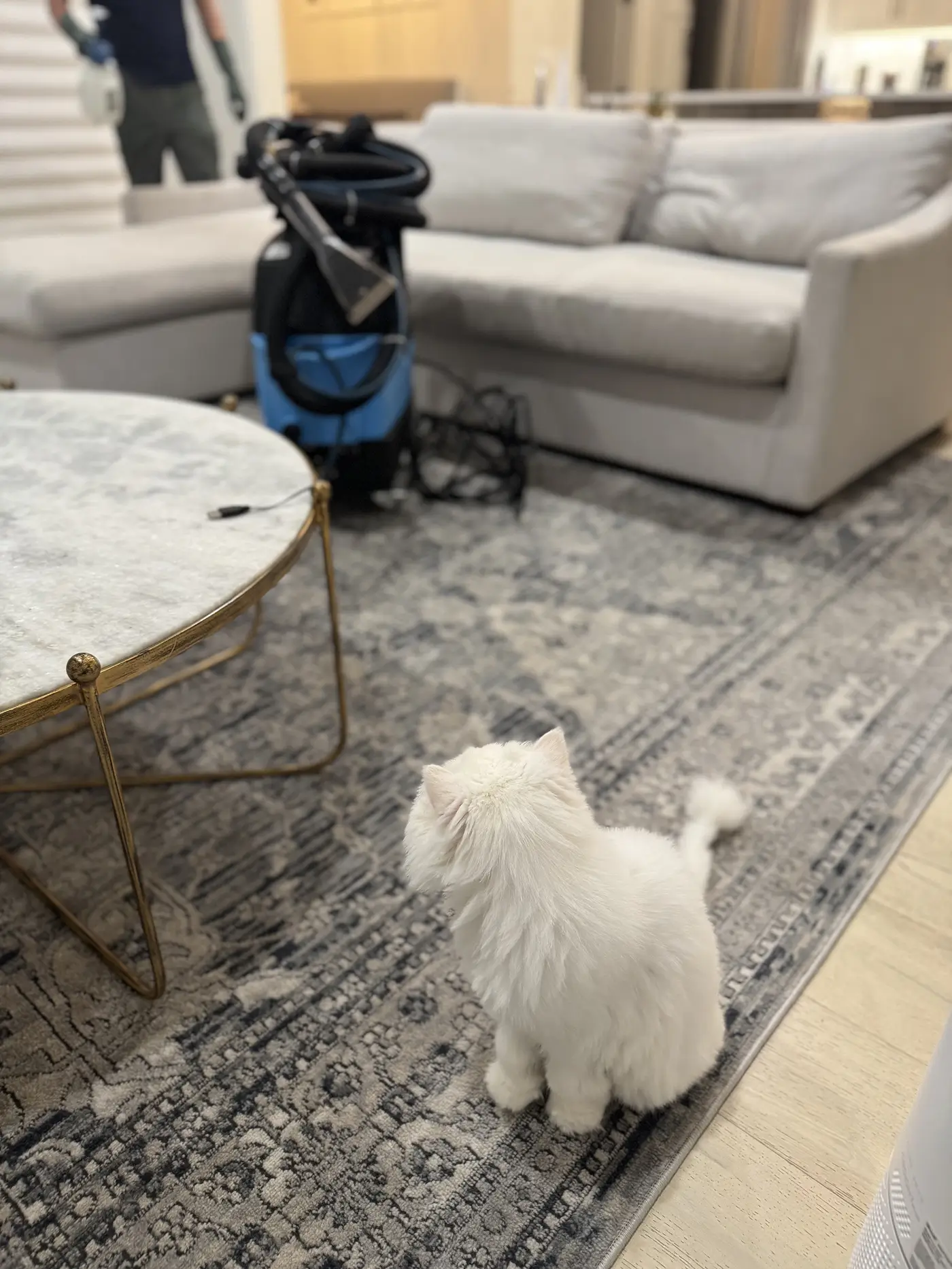
If you live with a dog or cat, you already know this story. You can vacuum. You can light a candle. You can open windows for a full afternoon. For a moment, everything feels fine — and then the smell returns. Sometimes it hits you when you walk in the door. Sometimes it shows up on humid days. Sometimes you don’t notice it until a guest does.
The frustrating part is that pet odors often don’t match what you see. Your couch can look clean. Your carpet can look freshly vacuumed. Your home can feel tidy. And still, there’s that “pet smell” hanging in the air.
That’s because most pet odors aren’t surface-level. They come from what sinks into fabric, foam, and padding over time — and then quietly builds into a bigger problem than most people expect.
The Real Source of Pet Odor: Bacteria + Organic Material
When people say “my couch smells like dog,” they usually imagine the smell is coming from fur. In reality, fur is rarely the main cause. The smell comes from bacteria and microscopic buildup — the stuff you can’t see — feeding on organic material left behind by pets.
Pets naturally leave behind skin oils, saliva, dander, and tiny particles from paws and coats. Those materials settle into upholstery fibers and cushion foam. Once they’re there, they don’t just sit harmlessly. They become food for bacteria. And bacteria produce odor as a byproduct.
So the smell you notice isn’t the pet itself. It’s the ecosystem that forms inside soft surfaces after weeks and months of normal life.
Why the Smell “Suddenly” Gets Worse
A lot of homeowners say the same thing: “It wasn’t that bad before, and now it’s noticeable.” That’s not your imagination. Pet odor often reaches a tipping point.
At first, the buildup is light. The couch still smells mostly fine. Then it accumulates — more oils, more dander, more microscopic debris — until one day you catch it. Maybe the heat runs more. Maybe the humidity rises. Maybe you sit down and the cushion compresses, pushing air out of the foam. That’s when the odor becomes obvious.
This is why pet odor can feel inconsistent. It’s not that the smell disappears and returns at random. It’s that conditions change, and those conditions make trapped odor molecules release into the air.
Moisture Is the Odor “Volume Knob”
Humidity plays a huge role in pet odors, especially in places like Charlotte where moisture in the air is common. Moisture doesn’t just “carry” smells — it can reactivate them.
Upholstery and cushion foam act like sponges. When humidity rises, the materials absorb moisture. That added moisture wakes up bacteria, increases microbial activity, and helps odor compounds travel. In simple terms: humidity makes the smell louder.
It’s also why you might notice the couch smells worse after:
The odor source never left. It just became more active.
The Hidden Problem: Cushion Foam and Padding
Here’s the part most people don’t realize: the fabric you touch is only the outer layer. Under that layer is where odor problems become stubborn.
Cushion foam absorbs oils and moisture slowly, then holds onto them for a long time. If a pet regularly lies on the same spot, that spot becomes a storage unit for body oils, dander, and bacteria.
This is why a couch can smell even after you wipe the surface. You cleaned the “skin” of the couch, but the smell is living in the “organs.” The foam is the reservoir.
And once foam is contaminated, covering it up doesn’t solve it. Air fresheners may mask it for an hour. Fabric sprays may cover it until the product evaporates. But when you sit down and compress the cushion, the trapped air moves — and the odor comes right back out.
Pet Accidents Are Often Bigger Than They Look
Urine is one of the most common odor sources, and it doesn’t have to be a dramatic accident. Even a small amount can sink deep into cushions, carpet padding, or rugs.
When urine gets into fabric and padding, it doesn’t just “dry and disappear.” It breaks down over time. Bacteria feed on it. Ammonia compounds can form. And the smell changes from “wet dog” to something sharper and more persistent.
The worst part is that pet urine is designed to soak in. It travels with gravity, spreads through foam, and settles into the deepest layers. That’s why the surface can look normal while the odor keeps returning.
If you’ve ever thought, “I cleaned it, but it still smells when the room warms up,” that’s exactly what’s happening. The material underneath is still contaminated.
Why Vacuuming Isn’t Enough (Even If You Do It All the Time)
Vacuuming helps with loose hair and crumbs. But pet odor isn’t caused by hair sitting on top of the couch. The odor is in the embedded oils, the dander, and the bacteria below the surface.
Hair also tends to wedge into seams, under cushions, and into the texture of certain fabrics. Even with a strong vacuum, you rarely remove everything. And whatever remains continues to hold onto oils and odor compounds.
Think of vacuuming like sweeping a floor. It makes things look better, but it doesn’t disinfect or remove what’s been absorbed into porous material.
Why “Deodorizing Sprays” Usually Fail
Most deodorizing products work in one of two ways:
-
they add fragrance to overpower the smell
-
they use a chemical that temporarily neutralizes odor molecules on the surface
The key phrase is “on the surface.”
If the odor is in the foam, padding, or deeper fibers, surface sprays can’t solve it. Even worse, many sprays leave residue behind. That residue can attract more dirt, which gives bacteria even more to feed on. Over time, this can make the couch feel grimy and smell “stale” faster.
It’s also common for DIY cleaning to involve too much water. When homeowners oversaturate upholstery, the couch may not dry properly. A damp cushion becomes the perfect environment for odor to intensify.
That’s how good intentions turn into a smell that seems impossible to remove.
The Truth: Pet Odor Is a Deep-Cleaning Problem
To truly remove pet odor, you have to remove what’s causing it — not just perfume over it. That typically means breaking down and extracting:
When done correctly, deep upholstery cleaning targets the layers where odors live. It’s not only about “steam.” It’s about controlled moisture, proper agitation, and strong extraction so the couch dries fast and doesn’t turn into a damp sponge.
That’s why professional cleaning tends to work when DIY methods don’t. It’s not magic. It’s reach and removal.
How to Know If the Odor Is in Your Couch (Not Just the Room)
A simple test: get close to the couch and smell the area where your pet lies most often. Then press down on the cushion and release. If you notice a stronger odor when you compress the cushion, that’s a sign the smell is inside the foam.
Another clue is repeat odor. If you’ve “cleaned” the couch multiple times but the smell returns after a few days, the source is deeper than the fabric.
Final Thoughts
Pet odors aren’t a sign that you’re doing something wrong. They’re a sign that soft surfaces hold onto life. Couches, rugs, carpets, and cushions quietly absorb oils, moisture, dander, and bacteria — and those things create odor from the inside out.
Once you understand that, the problem becomes clearer. You can’t permanently remove a deep odor with a surface solution. The only lasting fix is getting the source out of the fibers and padding where it lives.