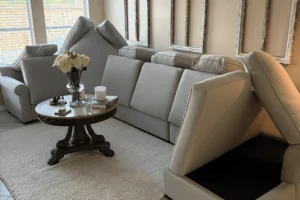
Ever walked into your living room and caught a whiff of last night’s stir-fry — coming straight from your sofa? 🍳 You’re not imagining it. Cooking odors have a sneaky way of traveling from the kitchen and settling deep into your upholstered furniture. As someone who does upholstery cleaning in Charlotte, NC every single day, I can tell you — this is one of the most common complaints we hear from homeowners. Let’s break down exactly why it happens and what you can do about it.
Why Soft Surfaces Absorb Kitchen Smells So Easily
Hard surfaces like countertops or tile floors? Smells bounce right off them. But upholstery fabric — the soft, woven material covering your couch, armchairs, and cushions — works more like a sponge.
Here’s a simple way to think about it: imagine your sofa fabric as thousands of tiny loops and fibers, all tangled together. When cooking vapors float through the air, those microscopic grease and odor particles get trapped inside those loops. Over time, layer after layer builds up — and that’s when your couch starts holding onto smells you’d rather forget.
Fabrics like microfiber, chenille, and velvet are especially absorbent. Even your cushion foam underneath can soak up odor molecules that pass through the fabric. That’s why a quick spray of air freshener barely scratches the surface — it masks the smell for an hour but does nothing for what’s already embedded inside. Professional upholstery cleaningreaches those deeper layers that surface treatments simply can’t touch.
Open-Plan Homes: Beautiful Design, Sneaky Odor Problem
Open-concept floor plans — where the kitchen, dining, and living room all flow into one shared space — are incredibly popular right now, and for good reason. They feel bright, social, and modern. But here’s the trade-off nobody talks about: there are no walls to stop cooking smells from drifting straight onto your furniture. 🏡
In a traditional home with a separate kitchen, odors stay mostly contained. In an open-plan layout, the moment you start sautéing onions or frying bacon, that aromatic cloud travels freely and lands on every soft surface in the room — your sofa, your throw pillows, your curtains, even your area rug.
We see this constantly with clients in Charlotte, NC. They’ll say, “I keep my house clean, but something always smells off.” Nine times out of ten, it’s the furniture absorbing years of everyday cooking. Furniture fabric cleaning is often the missing piece of their cleaning routine.
The Food Odors That Stick Around the Longest
Not all cooking smells are equal when it comes to stubbornness. Here are the worst offenders we deal with during couch cleaning in Charlotte, NC:
- Fried foods — Frying releases oily aerosols (tiny floating grease droplets) that bond strongly to fabric fibers
- Fish and seafood — Contain compounds that break down into particularly pungent, long-lasting molecules
- Garlic and onion — The sulfur compounds in these ingredients cling to porous materials for weeks
- Curry and spices — Rich, oil-based spices penetrate deep and are notoriously difficult to neutralize
- Bacon and smoked meats — The smoke and fat combination is almost tailor-made to embed itself in soft furnishings
If any of these are regulars in your kitchen, your sofa is likely holding onto their memory long after the plates are cleared. 😅
Simple Habits That Help Reduce Odor Buildup
You don’t have to choose between cooking your favorite meals and having a fresh-smelling living room. A few small habits go a long way:
Ventilate while you cook. Run your range hood fan on high and open a window when possible. This pulls cooking vapors up and out before they spread.
Use your HVAC fan setting. Switching your thermostat fan from “auto” to “on” while cooking keeps air circulating and reduces how much settles on surfaces.
Vacuum your upholstery weekly. A good vacuum with an upholstery attachment pulls out loose odor particles before they bond permanently. We recommend doing this as part of your regular cleaning routine — think of it like brushing your teeth for your couch. 🛋️
Baking soda trick. Lightly sprinkle baking soda on dry cushions, let it sit for 15–20 minutes, then vacuum it off. It naturally absorbs mild odors. This works well for light, recent smells — but won’t fix deep, long-term buildup.
Wash removable covers. If your cushion covers zip off, launder them every 4–6 weeks. Always check the care label first — some fabrics require cold water or air drying to avoid shrinking.
How Professional Cleaning Actually Removes Trapped Cooking Smells
Here’s where things get really interesting. 🔬 When we perform professional sofa cleaning, we’re not just cleaning the surface — we’re treating the entire depth of the fabric system.
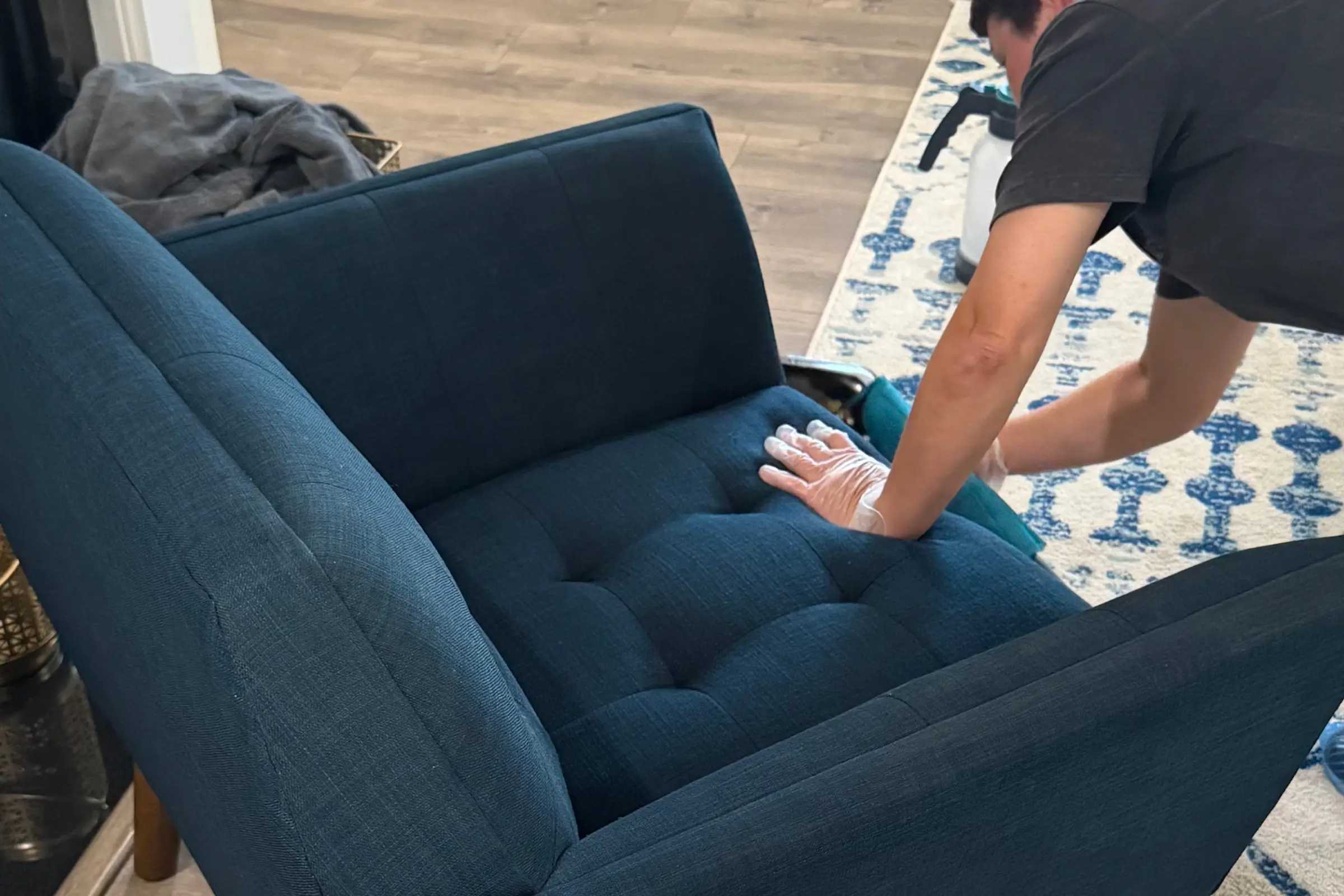
Steam upholstery cleaning (also called hot water extraction) is one of our most effective methods for odor removal. It works by injecting hot water and a cleaning solution deep into the fabric fibers, then immediately extracting it back out — pulling trapped odor particles, grease residue, and bacteria along with it. The heat also helps break down odor-causing compounds at a molecular level.
For particularly stubborn smells — like years of accumulated cooking odors — we may use enzyme-based treatments. Enzymes are natural biological agents that literally digest organic odor molecules, eliminating the smell rather than covering it up.
This is why a couch deep cleaning from a professional upholstery cleaning service produces results that no home remedy can replicate. The equipment alone — professional-grade extraction machines — creates suction levels that consumer vacuums can’t match.
Conclusion: Your Couch Deserves a Real Fresh Start 🌟
Cooking odors settle into upholstered furniture for a clear reason: soft fabrics are highly absorbent, open-plan homes remove the barriers that once contained kitchen smells, and the most stubborn food odors — fried foods, fish, garlic, curry — contain compounds that bond deeply with fibers over time. Prevention habits like ventilating while you cook, vacuuming regularly, and washing removable covers will slow the buildup. But once those odors are truly embedded, surface treatments simply won’t cut it.
Upholstery cleaning is genuinely more complex than it looks. It requires the right equipment, the right cleaning agents for each fabric type, and the skill to treat odors at their source — not just mask them. Done wrong, it can damage your fabric, leave moisture trapped inside cushions, or spread the problem further.
That’s exactly why we’re here. Charlotte Steamers – Couch Cleaning specializes in professional upholstery cleaning in Charlotte, NC, and we’d love to help your furniture smell — and feel — brand new again. 💛 Book your professional couch cleaning today and let’s give your living room the fresh start it deserves!