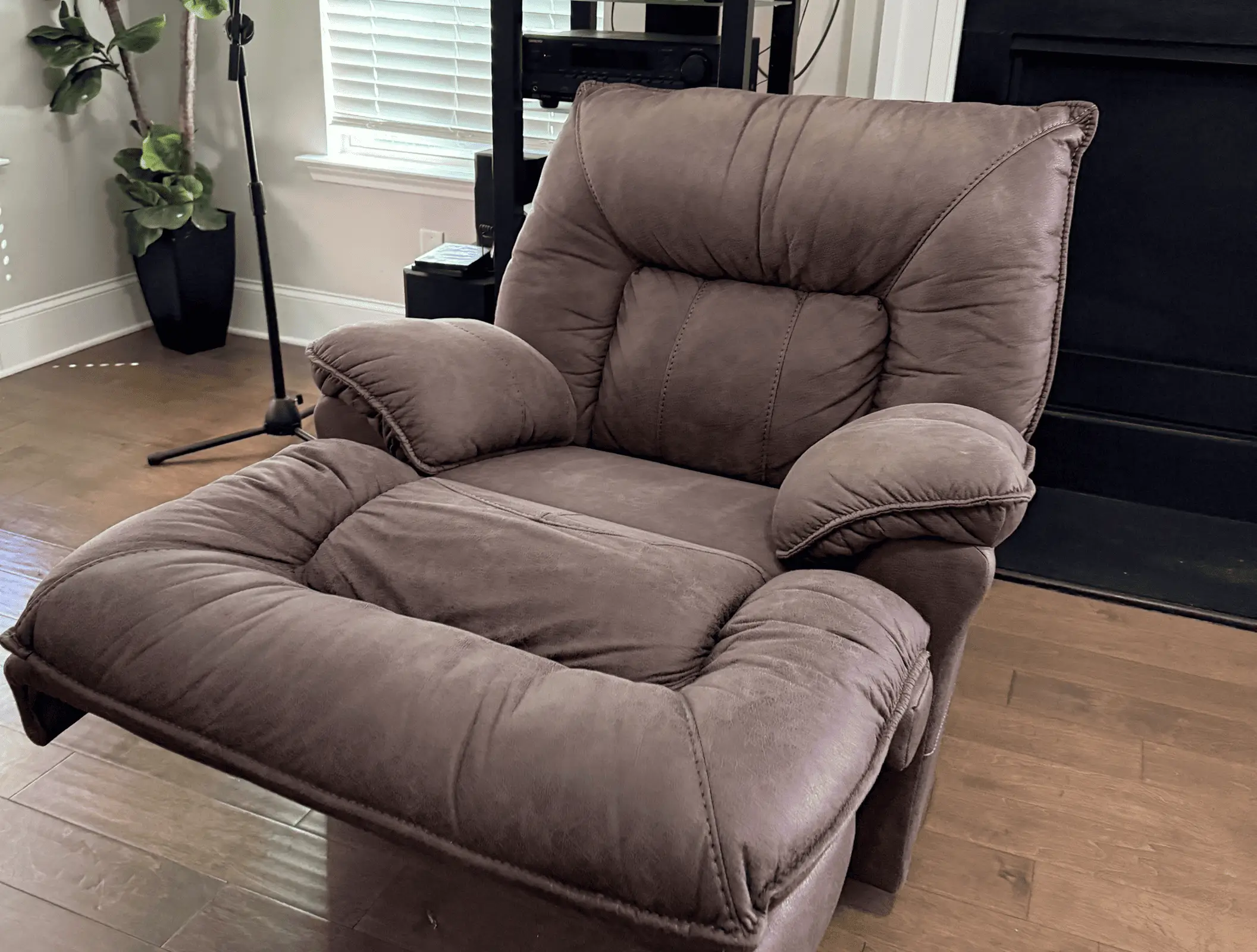
You open the storage unit, pull the moving blanket off your favorite sofa, and… oh. That smell. That dusty, closed-up, “where has this been living?” smell. 😅 If you’ve ever moved a couch back home after months in storage, you know exactly what I’m talking about — and I promise, your furniture is not ruined. In most cases, a proper upholstery clean brings it right back to life.
I’ve spent years doing hands-on upholstery cleaning in Charlotte, NC, and stored furniture is one of the most common things my crew rescues. Let me walk you through what really happens to a sofa in storage, and what cleaning can (and can’t) fix.
Dust Doesn’t Take a Break in Storage 🧹
Here’s the first thing people get wrong: they assume a closed storage unit is a clean storage unit. It isn’t.
Dust settles constantly, even in a sealed room. Over six or twelve months, that fine gray film works its way past the plastic wrap, into the seams, down into the cushion cores, and deep into the fibers. Think of it like a wool sweater left on a shelf all winter — it looks fine until you shake it out near a sunny window and see the cloud.
And it’s not just “dust” in the innocent sense. What settles into stored upholstery is usually a mix of:
- Fine soil and grit tracked in on shoes and dollies
- Textile fibers shed from blankets, wraps, and nearby boxes
- Dust mite debris (a very common allergy trigger)
- Dry pollen and outdoor particles that drift in through vents and doors
That grit is the sneaky part. Every time you sit down, those tiny hard particles rub against the fabric fibers like sandpaper. That’s why furniture cleaning after storage isn’t just cosmetic — it protects the fabric from premature wear.
Musty Smells: What Low Airflow Actually Does 🌬️
Ever notice how a stored couch smells like a basement, even when there’s no visible mold? That’s the low-airflow effect.
Upholstery is basically a sponge with legs. Foam, batting, and fabric all hold humidity. In a space with little air movement, that trapped moisture just sits there, and moisture plus organic material (skin cells, food crumbs, pet dander) equals odor-producing bacteria. In humid Southern summers, this happens faster than most homeowners expect.
A quick definition, since we throw this word around a lot: VOCs — volatile organic compounds — are simply odor molecules light enough to float into the air. That “musty” smell is VOCs escaping the cushion and reaching your nose. Spraying air freshener just adds a second smell on top of the first one. To actually remove the odor, you have to remove the source, deep in the fibers. That’s what proper fabric cleaning does.
The Risk of Bringing Stored Furniture Straight Into Your Home
I get it — moving day is exhausting and you just want the sofa in the living room. But here’s what you’re carrying inside with it:
Allergens. Dust mite waste and mildew spores are among the top indoor allergy triggers. Bringing an untreated stored couch into a bedroom or family room is like opening a bag of old dust in the middle of your house.
Odor transfer. Fabric is porous. Musty smells migrate into rugs, curtains, and even drywall over time.
Hitchhikers. Storage units share walls, and pests don’t respect them. Cushion seams are a favorite hiding spot.
Our technicians recommend a simple rule: clean it before it comes inside, or at minimum, before anyone sits on it. It’s the same logic as washing produce before it hits the cutting board. 🍎
What Upholstery Cleaning Can Improve After Storage ✨
This is the good news, and it’s genuinely good.
Deep soil and dust removal
Professional upholstery cleaning uses hot water extraction — what most people call steam upholstery cleaning. A cleaning solution is injected into the fabric to loosen soil, then a powerful vacuum pulls it back out along with the dirt. Think of it as a rinse cycle for a couch that can’t go in a washing machine.
Odor neutralization
Once the soil and moisture are extracted, we treat the remaining odor at the molecular level rather than covering it up. In most cases, that basement smell is completely gone the same day.
Stain recovery
Old spills that were “fine” before storage often darken and set over time. Couch stain removal after storage is very doable, especially on water-safe fabrics.
Fabric refreshing
Crushed, flattened cushions from being stacked or wrapped can regain a surprising amount of texture and loft after a proper sofa deep cleaning.
When It’s Time to Call a Professional 🛠️
Some situations are simply beyond a home vacuum and a bottle of spray.
- Visible mold or mildew growth. Never scrub it yourself; you’ll spread the spores.
- Delicate or “S-coded” fabrics. That tag code means solvent-only — water will leave rings or shrink the material.
- Leather and suede, which need pH-balanced products, not household cleaners.
- Heavy pet or smoke odor that soaked in before storage.
- Antique or high-value pieces, where a mistake costs more than the cleaning.
If you’re searching for “furniture cleaning near me” or “couch cleaning near me” after a move, this is exactly the moment to lean on a trained crew rather than experiment. 😊
Final Thoughts
So — can upholstery cleaning help after a long period of storage? Absolutely. Dust settles deep into the fibers, low-airflow spaces breed musty odors, and moving that furniture straight indoors carries allergens and smells into your living space. A thorough cleaning removes trapped soil, neutralizes odor at the source, lifts set-in stains, and restores the texture your sofa had the day you packed it away. But as you’ve seen, doing it right means understanding fabric codes, moisture control, extraction equipment, and drying times — it’s genuinely detailed, physical work, and the wrong product on the wrong fabric can cause damage that cleaning can’t undo.
That’s why we’d love to do the heavy lifting for you. Charlotte Steamers – Couch Cleaning offers ready-made upholstery cleaning packages, so you don’t have to guess what your piece needs — just pick a package, book a time, and let our technicians handle the rest. Bring your furniture home fresh, safe, and ready to enjoy. 💙