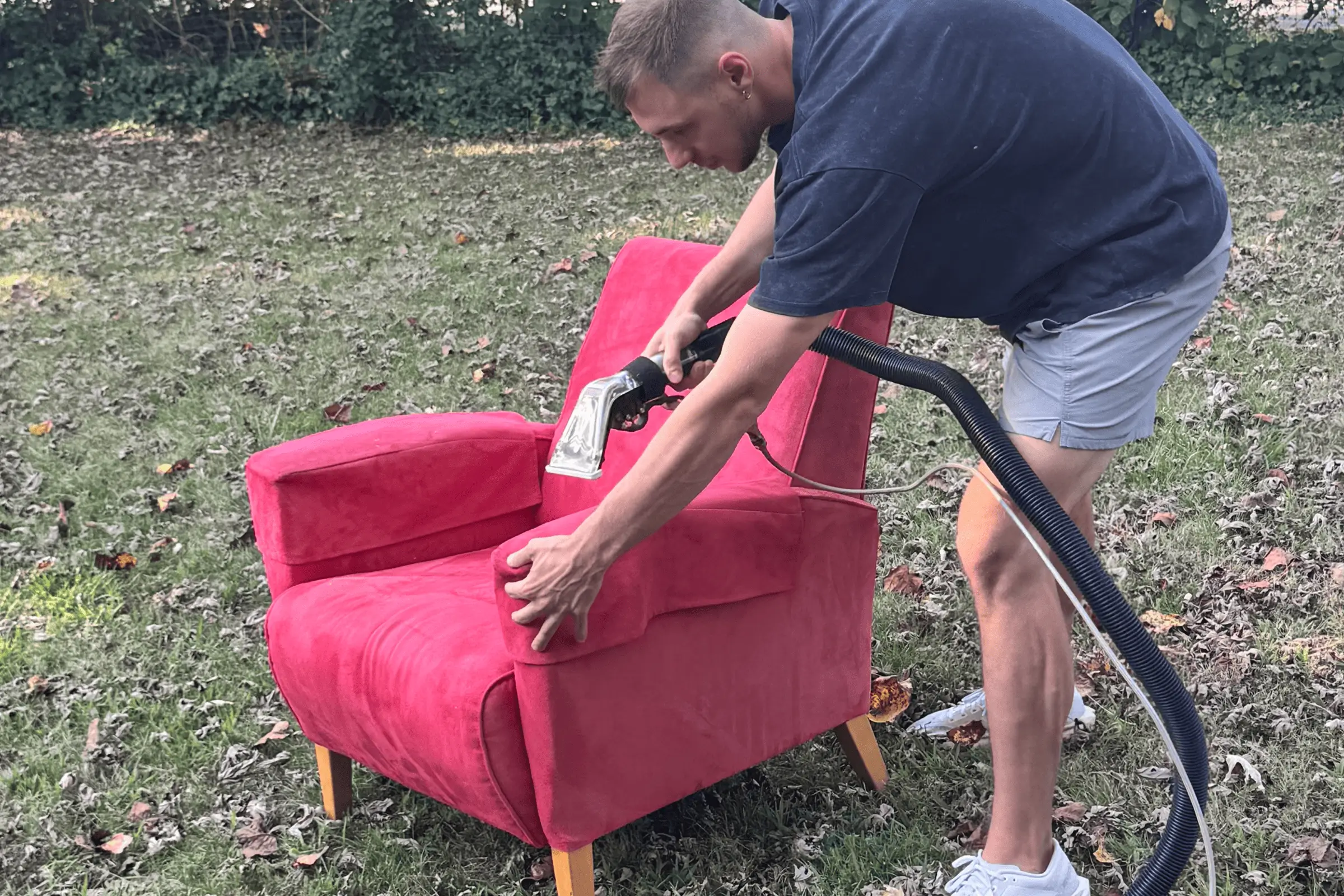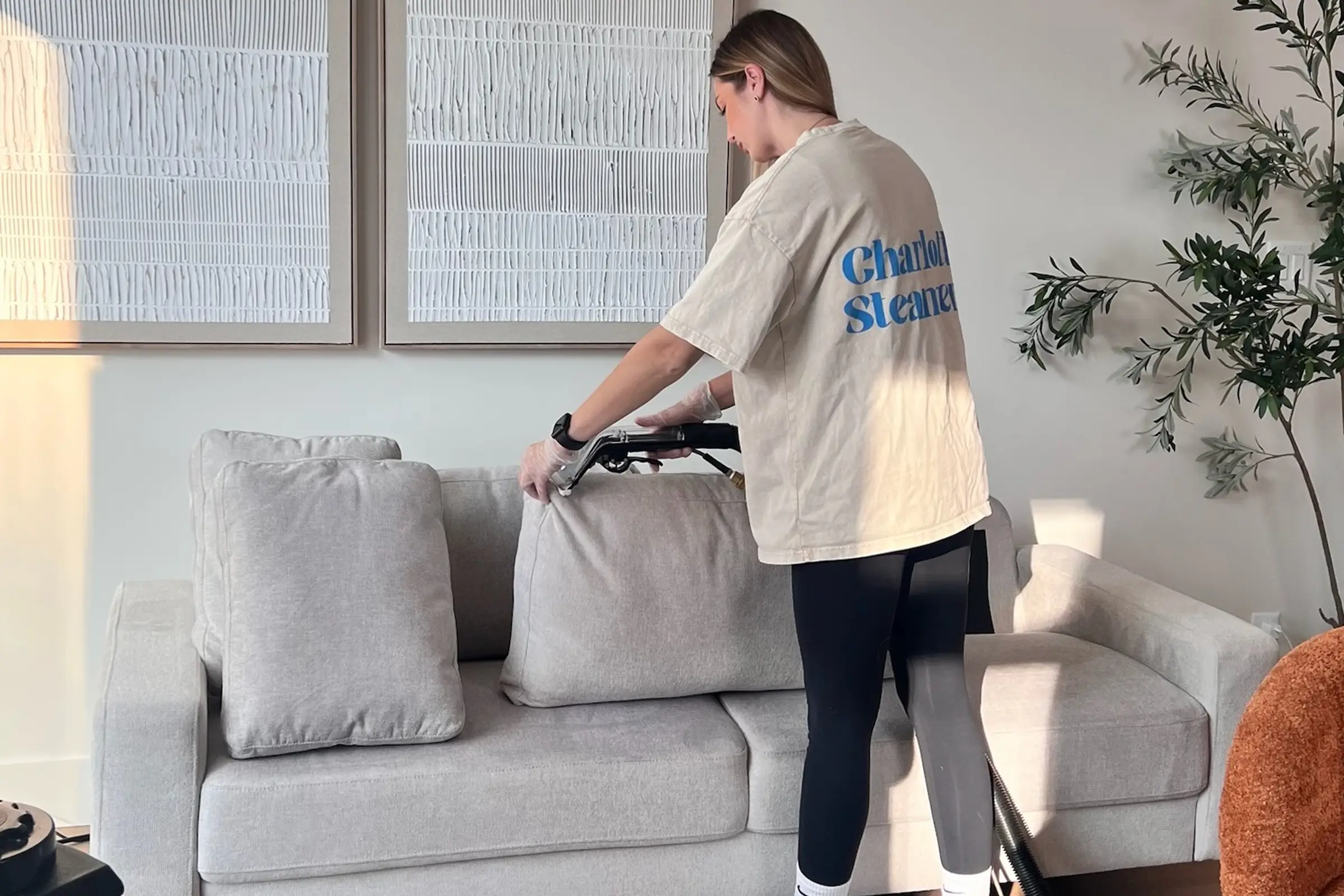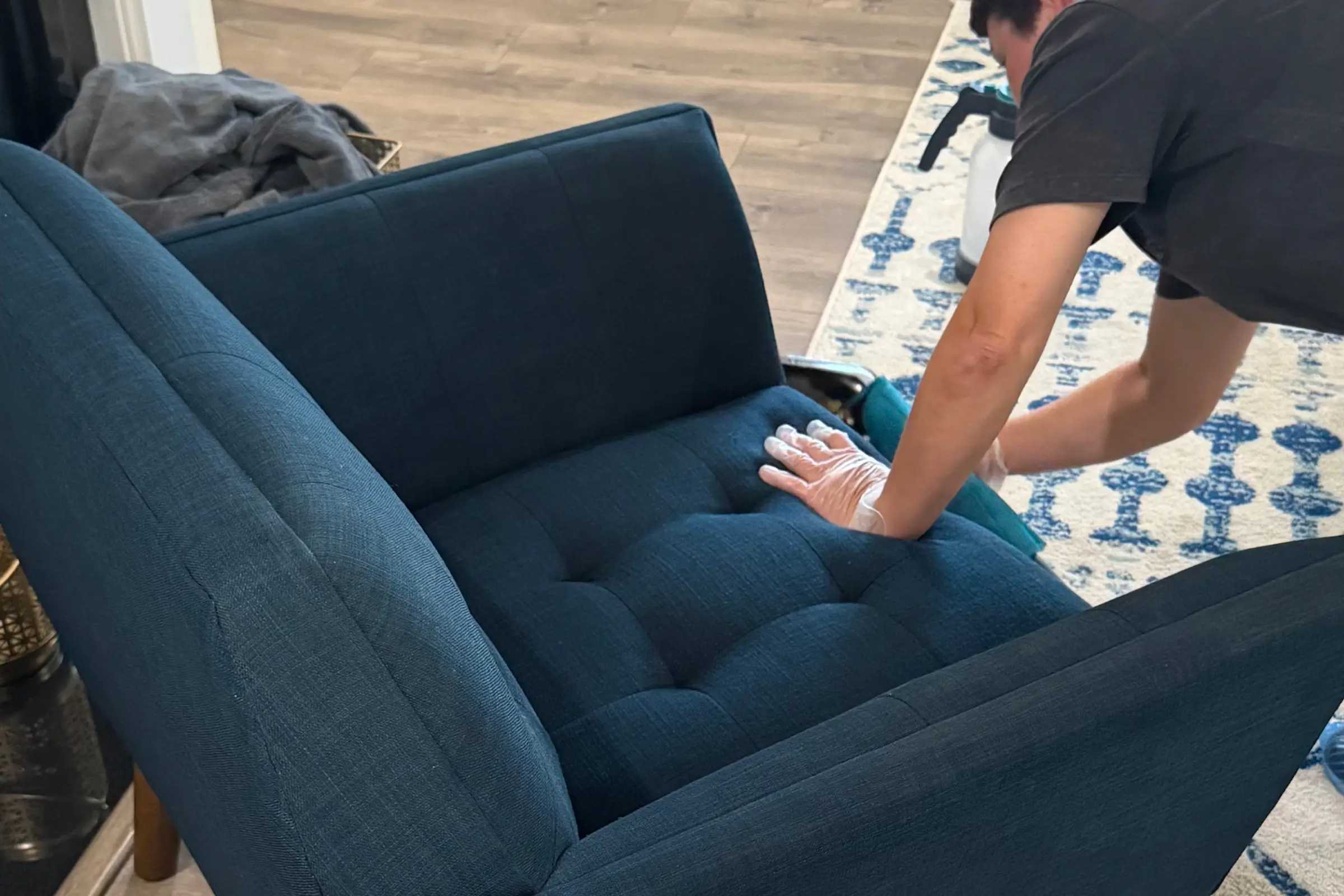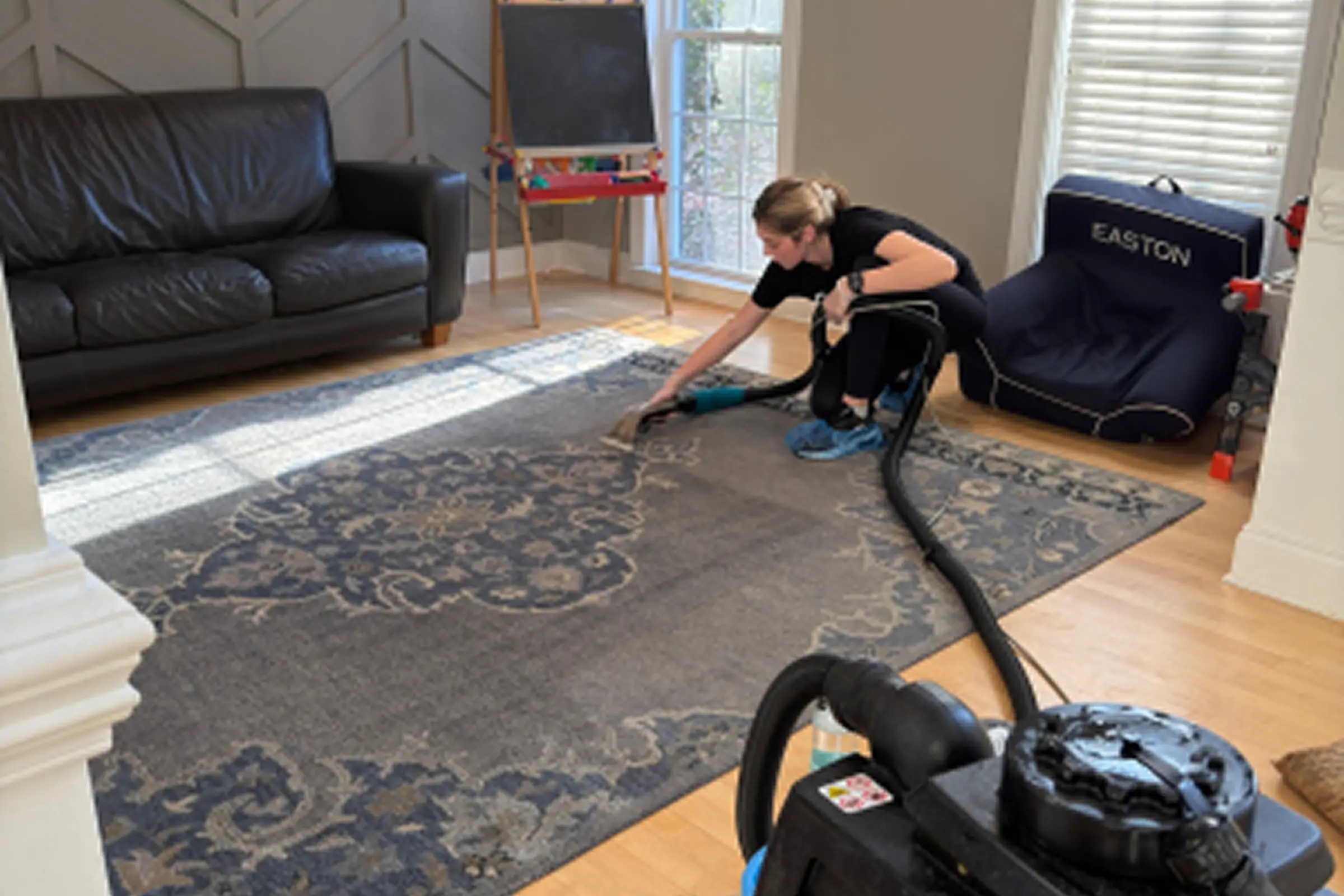
How to Keep Accent Chairs Clean in Busy Living Spaces

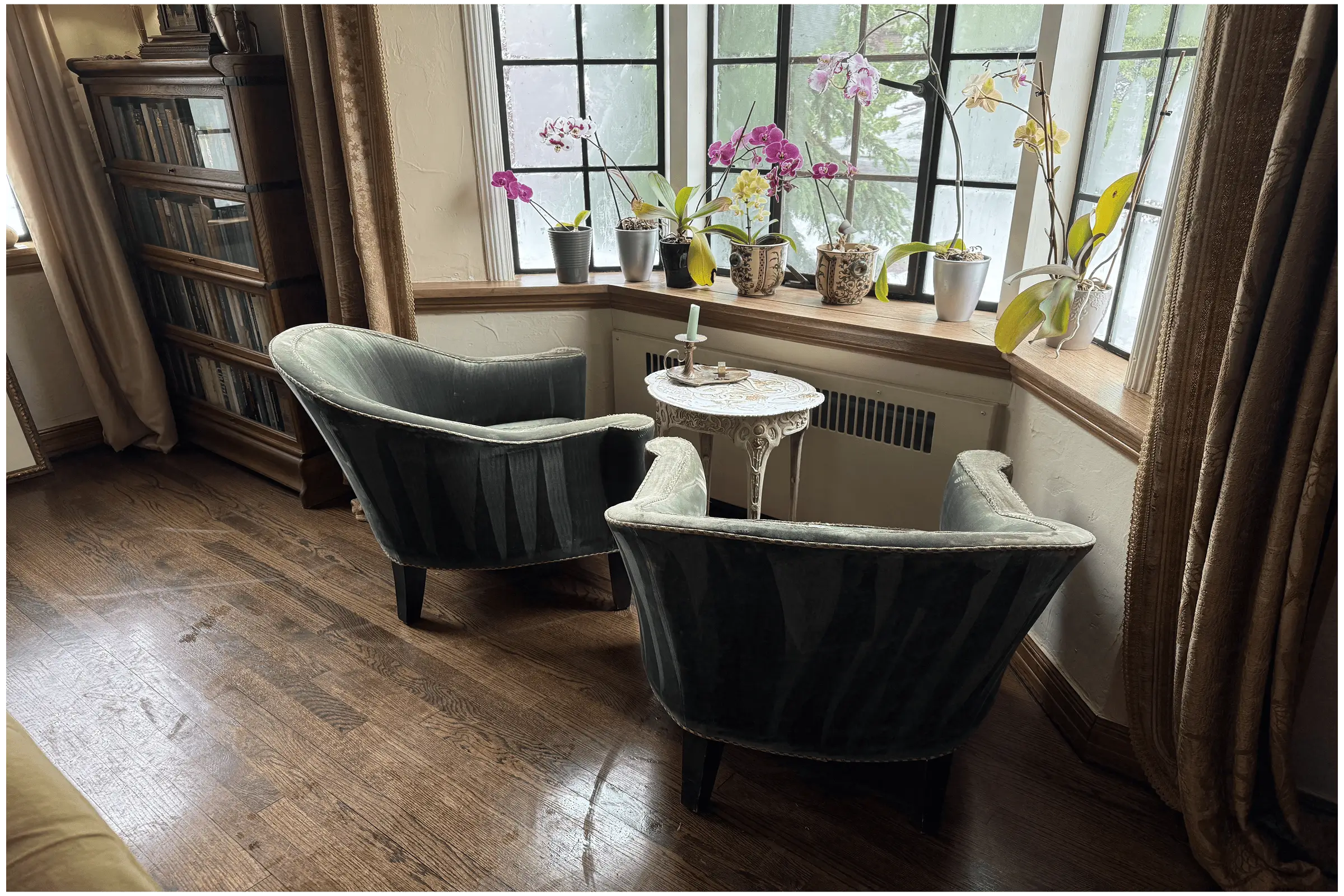
That gorgeous accent chair in your living room? It’s working harder than you think. 🪑

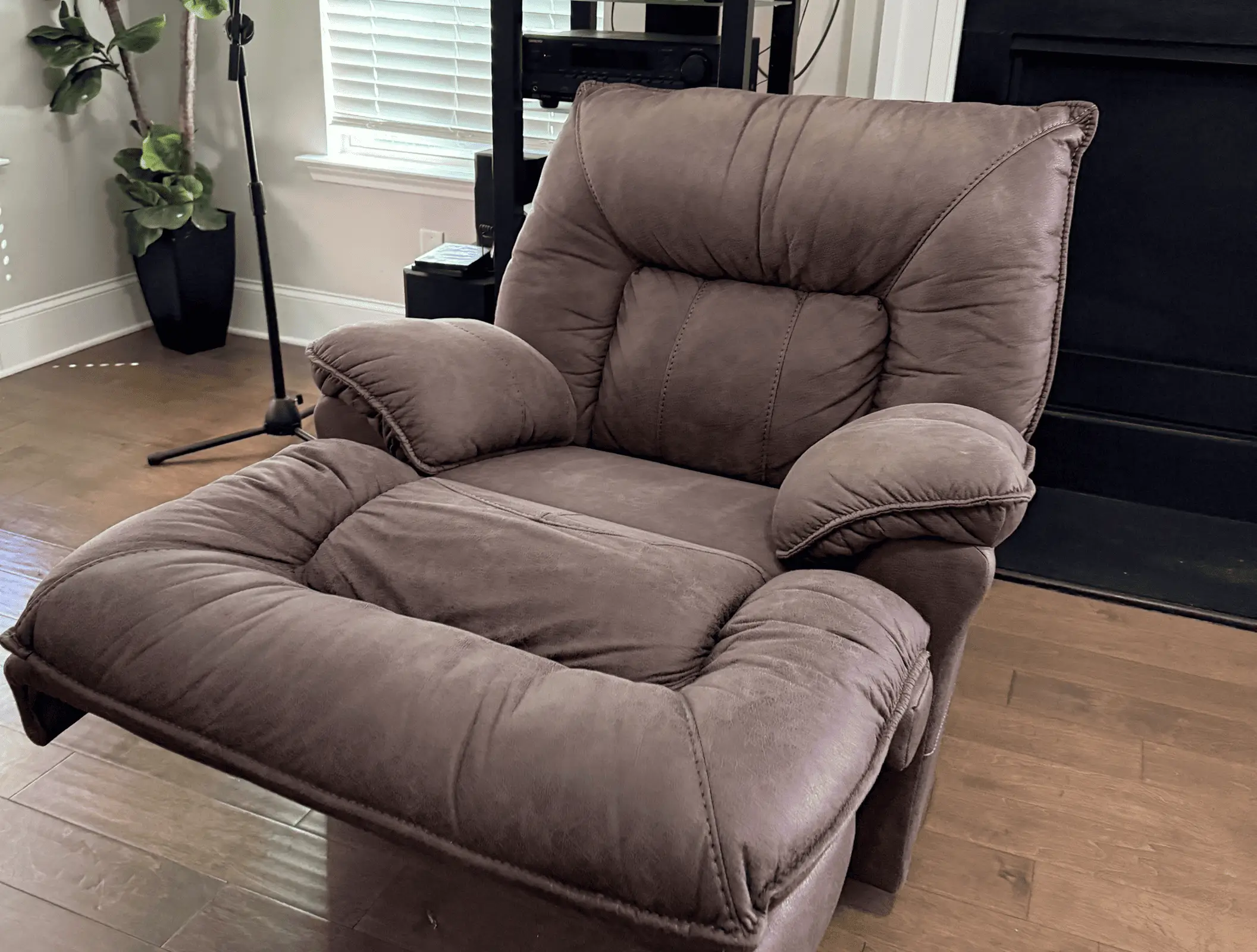
You might not sit in it every day, but between the occasional guest, the kid who plops down while scrolling their phone, and your own evening reads — that chair is quietly collecting everything. Body oils, dust, pet dander, and mystery crumbs are building up in the fabric right now, even if it still looks clean.

As someone who does upholstery cleaning in Charlotte, NC for a living, I can tell you: accent chairs are almost always the most overlooked piece of furniture in a home — and often the dirtiest by the time we get to them.

Let me walk you through what’s really going on and how to keep those beautiful chairs looking their best. 💛


Why Your Accent Chair Collects More Dirt Than You’d Expect

Here’s something most people don’t realize: occasional use doesn’t mean occasional dirt.

Every time someone sits down, the fabric absorbs a tiny amount of body oil and skin cells. Think of it like a sponge — it doesn’t have to be soaked to be dirty. After a few months of “light” use, that buildup is very real. Add indoor dust settling into the fibers, and you’ve got a chair that needs upholstery cleaning even if it sees a fraction of the traffic your sofa does.

Accent chairs often have decorative fabrics — velvet, linen, boucle — that trap particles especially well. These textiles look stunning but act like little magnets for everything floating in your air. 😬


The Hidden Dirt Problem: Repeated But Infrequent Use

Here’s a comparison I use with clients all the time: imagine wearing the same shirt once a week for six months without washing it. You’d only wear it a few hours each time — but would you call it clean?

That’s your accent chair.

The dirt from each use layers on top of the last. Since the chair isn’t used constantly, you might not notice the gradual change in texture or color. But under proper lighting — or when a professional starts the upholstery fabric cleaningprocess — the difference is striking.

We’ve worked on accent chairs in Charlotte, NC homes where the owners were genuinely surprised by the color of the rinse water. The fabric looked fine. It wasn’t. 😅


Spot Cleaning vs. Full Cleaning: Knowing the Difference

Spot cleaning (dabbing at a stain right after it happens) is great — and we absolutely recommend doing it. It prevents stains from setting into the fibers permanently. A clean white cloth, cold water, and gentle blotting can save your fabric in the short term.

But spot cleaning is not the same as upholstery cleaning. It only addresses the surface of one area. It doesn’t remove embedded oils, allergens (like dust mites — tiny creatures that live in fabric and trigger allergies), or the general grime that builds up across the whole chair.

Think of it this way: wiping your kitchen counter handles spills, but it doesn’t replace a deep clean of the whole kitchen. Same idea. ✨

For decorative chairs with delicate or patterned fabric, we recommend being especially cautious with DIY spot treatments — some cleaning products can cause fabric discoloration or water rings that are very difficult to reverse.


Best Maintenance Habits for Your Accent Chairs

Keeping your accent chairs cleaner between professional visits isn’t complicated. Here’s what we tell our clients: 🧹

  • Vacuum weekly using an upholstery attachment — this lifts surface dust before it works its way into the fibers
  • Rotate and fluff cushions regularly so wear is even and airflow is maintained
  • Act fast on spills — blot (never rub!) immediately with a clean, dry cloth
  • Keep pets off decorative chairs if possible — pet dander and oils are especially tough on delicate fabrics
  • Avoid direct sunlight on fabric chairs — UV exposure fades colors over time

These small habits make a big difference. They’re not a replacement for professional furniture fabric cleaning, but they extend the life of your fabric and keep things fresher between deep cleans.


When Accent Chairs Need Professional Upholstery Cleaning

So when should you call in the pros? Here’s our honest answer: at least once a year for most accent chairs in active households — more often if you have kids, pets, or allergy sufferers at home.

But also watch for these signs: 👀

  • The fabric looks dull or “flat” even after vacuuming
  • There’s a faint musty or stale smell
  • Allergy symptoms seem worse when sitting in the chair
  • Stains that didn’t fully come out with spot cleaning
  • The fabric feels slightly sticky or rough to the touch

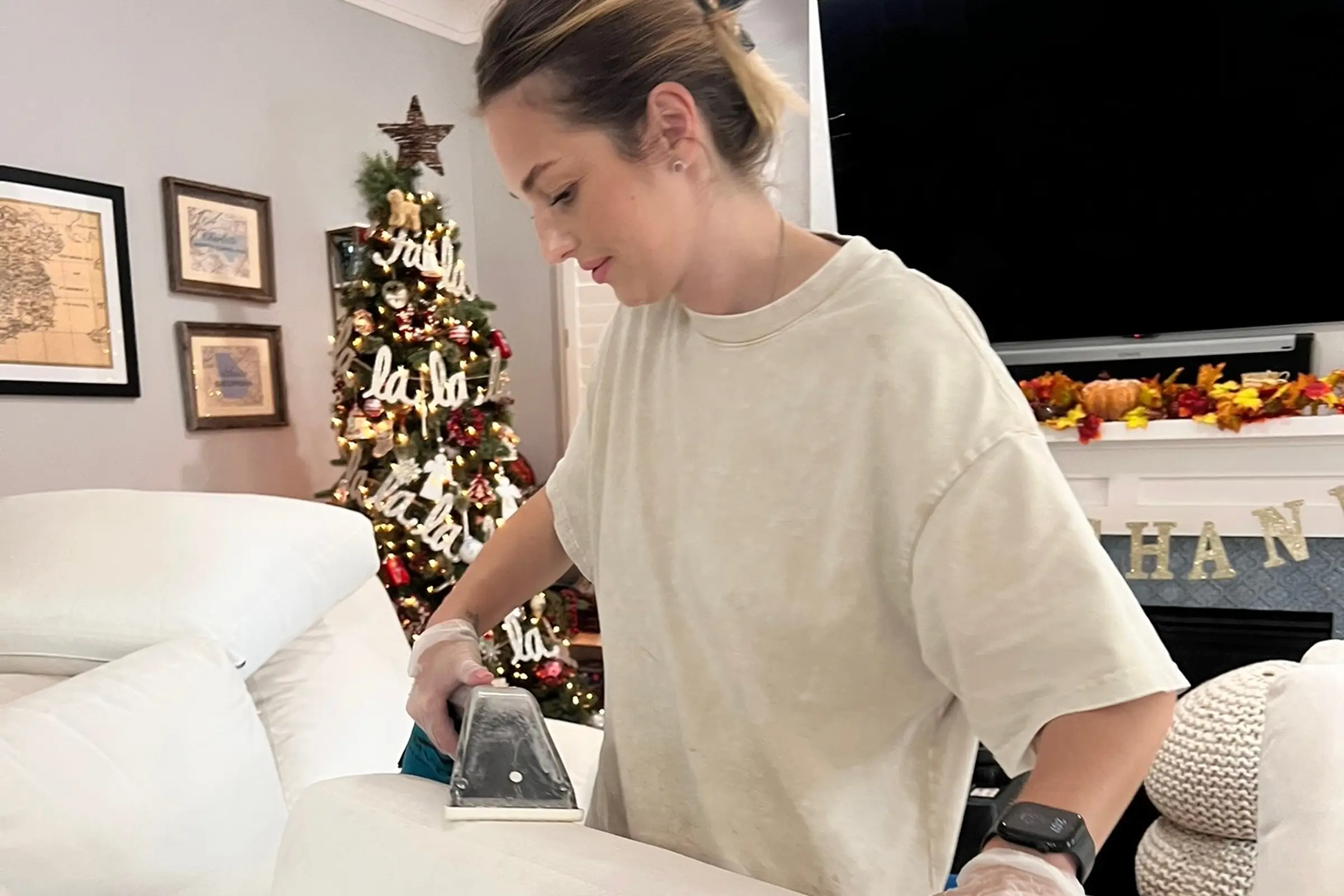
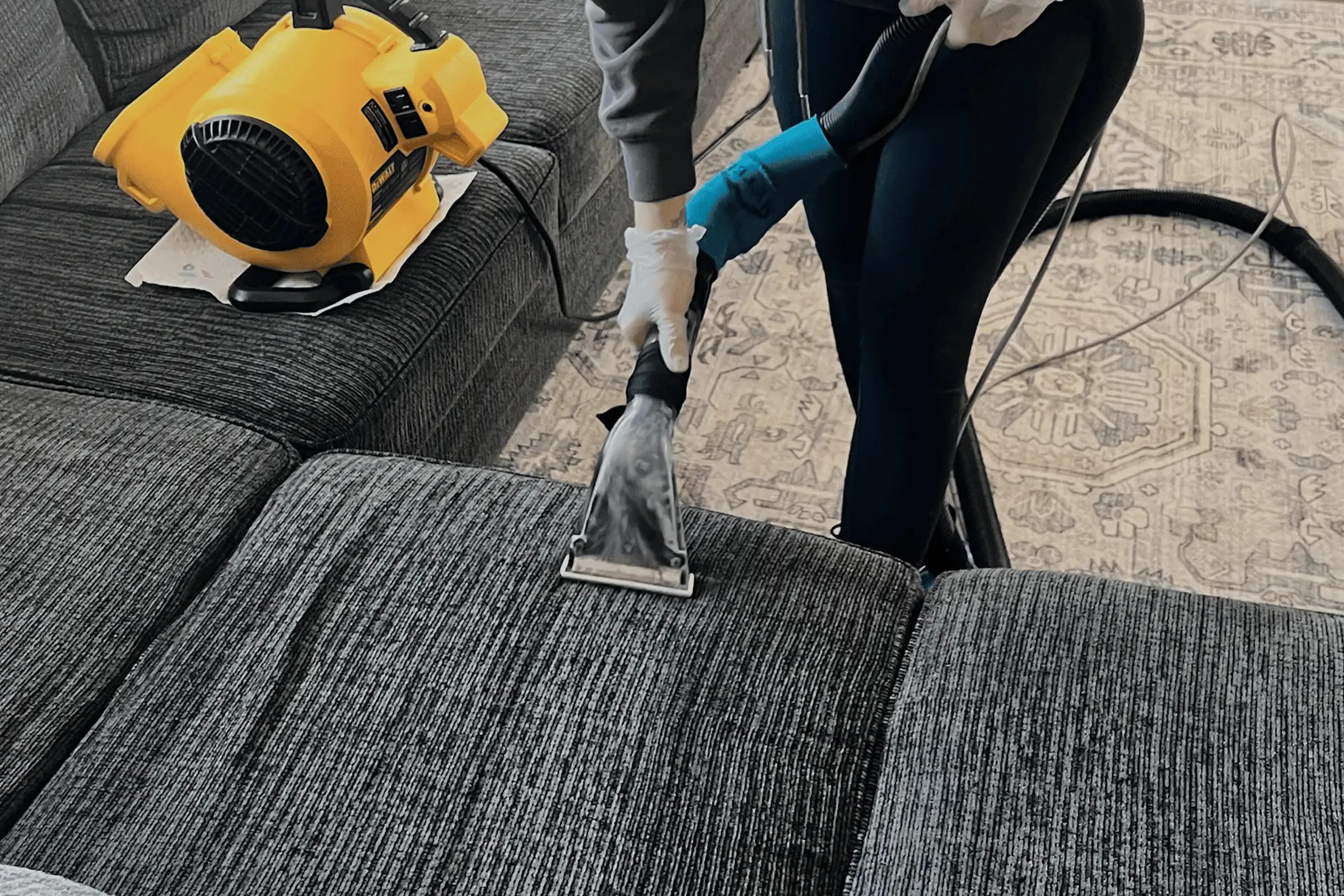
These are signals that surface maintenance isn’t cutting it anymore. Steam upholstery cleaning — which uses hot water extraction to pull dirt, oils, and allergens out of the fibers from the inside — is one of the most effective methods for restoring accent chair fabric without damaging it.

Our technicians recommend professional upholstery cleaning especially for specialty fabrics like velvet or linen, where DIY methods carry real risk of damage.


Conclusion: Beautiful Accent Chairs Stay That Way With the Right Care

Here’s the bottom line: accent chairs quietly accumulate body oils, dust, and embedded grime even with light use. That hidden dirt layers over time in ways spot cleaning simply can’t address. Good maintenance habits — vacuuming, fast spill response, protecting from sunlight — help, but they’re only part of the picture.

The full picture is that professional upholstery cleaning is genuinely complex work. It requires knowing your fabric type, choosing the right cleaning method, using professional-grade equipment, and understanding how to protect delicate textures while still getting a deep, thorough clean. It’s not a job that rewards guessing.

If your accent chairs in Charlotte, NC are due for a real refresh, Charlotte Steamers – Couch Cleaning is here to help. 🌟 Our team brings the expertise, the right tools, and real care to every piece of furniture we clean — so your beautiful chairs stay exactly that: beautiful.

👉 Book your upholstery cleaning service today and give your accent chairs the professional attention they deserve!

Why Upholstery Cleaning Matters After Home Renovation or Remodeling

You just finished a home renovation — the new floors look stunning, the walls are freshly painted, and everything feels brand new. But have you looked closely at your couch lately? 🛋️

Here’s something most homeowners don’t realize until it’s too late: renovation work leaves an invisible mess behind, and your furniture absorbs every bit of it.

Dust From Construction Settles Deep Into Furniture Fibers

When walls get knocked down, floors get sanded, or drywall gets cut, fine construction dust fills the air and floats around for hours — sometimes days. That dust doesn’t just land on surfaces you can wipe. It works its way into upholstery fabric cleaning zones that are nearly impossible to reach with a regular cloth or even a vacuum.

Think of your sofa like a sponge. It sits right there in your living space, quietly collecting everything that drifts through the air. After a renovation, that means drywall particles, sawdust, plaster powder, and more — all embedded in the fibers. This is exactly why professional upholstery cleaning matters so much after a remodel.

Fine Debris That Regular Vacuuming Simply Misses

We get this question a lot: “Can’t I just vacuum my couch and call it done?” We completely understand the logic — but the honest answer is no. 😅

A standard household vacuum is great for surface debris, but it’s not designed for deep fabric cleaning. The ultra-fine particles left behind after construction are much smaller than what your vacuum’s suction can pull out from deep within the cushion fill and woven fibers. It’s a bit like trying to clean a coffee filter with a garden hose — the tool just isn’t built for that job.

Professional upholstery cleaning in Charlotte, NC uses specialized equipment — including hot water extraction (a method where pressurized hot water and cleaning solution are injected into the fabric and then pulled back out along with the dirt) — to reach those deeper layers your vacuum can’t touch.

Odors and Residue Left After Renovation Work

Fresh paint smell. Adhesive fumes. Sawdust. Sealant residue. These aren’t just unpleasant — they can linger in your upholstered furniture for weeks if left untreated. Your sofa, armchairs, and fabric-covered pieces act like odor sponges after renovation work. 😤

Beyond the smell, some renovation residues contain chemicals that can gradually break down fabric fibers over time — shortening the life of your furniture. A proper upholstery cleaning service addresses both the odor and the residue, leaving your fabric fresh and protected. Our technicians recommend scheduling couch cleaning in Charlotte, NC within two to four weeks after your project wraps up, before those odors settle in permanently.

The Best Timing for Post-Renovation Upholstery Cleaning

Timing really does matter here. ⏰

We recommend waiting until all renovation work is fully complete before booking your upholstery cleaning services. Why? Because if workers are still coming in and out, your furniture will just collect more debris after we clean it — and that’s a waste of your time and money.

Once the contractors are done and the final dust has had a day or two to settle, that’s the sweet spot. At that point, a professional furniture cleaning near you can do its job fully and effectively, giving you results that actually last.

Here’s a simple checklist before you schedule:

  • ✅ All construction work is finished
  • ✅ Windows have been opened to air out the space
  • ✅ Hard surfaces (floors, countertops) have already been cleaned
  • ✅ You’ve waited 24–48 hours after the last work day

How Deep Cleaning Restores Indoor Comfort After Renovation

There’s a real difference between a home that looks clean after a renovation and one that feels clean. Deep couch cleaning and sofa cleaning address what you can’t see — and what you definitely can feel, especially if you or anyone in your home has allergies or sensitivities. 🌿

Steam upholstery cleaning, for example, uses high-temperature steam to kill bacteria and dust mites (tiny microscopic bugs that live in fabric and can trigger allergies) that take up residence in your furniture during and after construction. After a proper professional sofa cleaning, the air quality in your home noticeably improves, fabrics feel softer, and that post-construction stuffiness simply disappears.

Furniture cleaning in Charlotte, NC done right doesn’t just clean — it restores your home to the comfortable, welcoming space you worked so hard to create.


Conclusion: Don’t Let Renovation Work Undo Your Fresh Start

Home renovation is a big investment, and you deserve to enjoy every inch of it — including your furniture. 🏡

As we’ve walked through, construction dust embeds itself deep into upholstery fibers where regular vacuuming can’t reach, renovation odors and chemical residues settle into fabric over time, and the right timing for couch deep cleaning makes all the difference in results that actually last. Steam and hot water extraction methods go far beyond surface cleaning, restoring not just the look but the feel and air quality of your home.

The truth is, professional upholstery cleaning is a detailed, labor-intensive process that requires the right equipment, the right technique, and real hands-on experience. It’s not something a quick DIY effort can replicate — and after everything you’ve invested in your renovation, your furniture deserves proper care.

That’s where Charlotte Steamers – Couch Cleaning comes in. Our team of experienced technicians specializes in post-renovation upholstery cleaning in Charlotte, NC, and we’re ready to help you finish your project the right way. 💪

👉 Ready to breathe easy in your refreshed home? Book your upholstery cleaning service today and let Charlotte Steamers handle the rest!

Why Your Couch Smells Like Last Night’s Dinner (And What to Do About It)

Ever walked into your living room and caught a whiff of last night’s stir-fry — coming straight from your sofa? 🍳 You’re not imagining it. Cooking odors have a sneaky way of traveling from the kitchen and settling deep into your upholstered furniture. As someone who does upholstery cleaning in Charlotte, NC every single day, I can tell you — this is one of the most common complaints we hear from homeowners. Let’s break down exactly why it happens and what you can do about it.


Why Soft Surfaces Absorb Kitchen Smells So Easily

Hard surfaces like countertops or tile floors? Smells bounce right off them. But upholstery fabric — the soft, woven material covering your couch, armchairs, and cushions — works more like a sponge.

Here’s a simple way to think about it: imagine your sofa fabric as thousands of tiny loops and fibers, all tangled together. When cooking vapors float through the air, those microscopic grease and odor particles get trapped inside those loops. Over time, layer after layer builds up — and that’s when your couch starts holding onto smells you’d rather forget.

Fabrics like microfiber, chenille, and velvet are especially absorbent. Even your cushion foam underneath can soak up odor molecules that pass through the fabric. That’s why a quick spray of air freshener barely scratches the surface — it masks the smell for an hour but does nothing for what’s already embedded inside. Professional upholstery cleaningreaches those deeper layers that surface treatments simply can’t touch.


Open-Plan Homes: Beautiful Design, Sneaky Odor Problem

Open-concept floor plans — where the kitchen, dining, and living room all flow into one shared space — are incredibly popular right now, and for good reason. They feel bright, social, and modern. But here’s the trade-off nobody talks about: there are no walls to stop cooking smells from drifting straight onto your furniture. 🏡

In a traditional home with a separate kitchen, odors stay mostly contained. In an open-plan layout, the moment you start sautéing onions or frying bacon, that aromatic cloud travels freely and lands on every soft surface in the room — your sofa, your throw pillows, your curtains, even your area rug.

We see this constantly with clients in Charlotte, NC. They’ll say, “I keep my house clean, but something always smells off.” Nine times out of ten, it’s the furniture absorbing years of everyday cooking. Furniture fabric cleaning is often the missing piece of their cleaning routine.


The Food Odors That Stick Around the Longest

Not all cooking smells are equal when it comes to stubbornness. Here are the worst offenders we deal with during couch cleaning in Charlotte, NC:

  • Fried foods — Frying releases oily aerosols (tiny floating grease droplets) that bond strongly to fabric fibers
  • Fish and seafood — Contain compounds that break down into particularly pungent, long-lasting molecules
  • Garlic and onion — The sulfur compounds in these ingredients cling to porous materials for weeks
  • Curry and spices — Rich, oil-based spices penetrate deep and are notoriously difficult to neutralize
  • Bacon and smoked meats — The smoke and fat combination is almost tailor-made to embed itself in soft furnishings

If any of these are regulars in your kitchen, your sofa is likely holding onto their memory long after the plates are cleared. 😅


Simple Habits That Help Reduce Odor Buildup

You don’t have to choose between cooking your favorite meals and having a fresh-smelling living room. A few small habits go a long way:

Ventilate while you cook. Run your range hood fan on high and open a window when possible. This pulls cooking vapors up and out before they spread.

Use your HVAC fan setting. Switching your thermostat fan from “auto” to “on” while cooking keeps air circulating and reduces how much settles on surfaces.

Vacuum your upholstery weekly. A good vacuum with an upholstery attachment pulls out loose odor particles before they bond permanently. We recommend doing this as part of your regular cleaning routine — think of it like brushing your teeth for your couch. 🛋️

Baking soda trick. Lightly sprinkle baking soda on dry cushions, let it sit for 15–20 minutes, then vacuum it off. It naturally absorbs mild odors. This works well for light, recent smells — but won’t fix deep, long-term buildup.

Wash removable covers. If your cushion covers zip off, launder them every 4–6 weeks. Always check the care label first — some fabrics require cold water or air drying to avoid shrinking.


How Professional Cleaning Actually Removes Trapped Cooking Smells

Here’s where things get really interesting. 🔬 When we perform professional sofa cleaning, we’re not just cleaning the surface — we’re treating the entire depth of the fabric system.

Steam upholstery cleaning (also called hot water extraction) is one of our most effective methods for odor removal. It works by injecting hot water and a cleaning solution deep into the fabric fibers, then immediately extracting it back out — pulling trapped odor particles, grease residue, and bacteria along with it. The heat also helps break down odor-causing compounds at a molecular level.

For particularly stubborn smells — like years of accumulated cooking odors — we may use enzyme-based treatments. Enzymes are natural biological agents that literally digest organic odor molecules, eliminating the smell rather than covering it up.

This is why a couch deep cleaning from a professional upholstery cleaning service produces results that no home remedy can replicate. The equipment alone — professional-grade extraction machines — creates suction levels that consumer vacuums can’t match.


Conclusion: Your Couch Deserves a Real Fresh Start 🌟

Cooking odors settle into upholstered furniture for a clear reason: soft fabrics are highly absorbent, open-plan homes remove the barriers that once contained kitchen smells, and the most stubborn food odors — fried foods, fish, garlic, curry — contain compounds that bond deeply with fibers over time. Prevention habits like ventilating while you cook, vacuuming regularly, and washing removable covers will slow the buildup. But once those odors are truly embedded, surface treatments simply won’t cut it.

Upholstery cleaning is genuinely more complex than it looks. It requires the right equipment, the right cleaning agents for each fabric type, and the skill to treat odors at their source — not just mask them. Done wrong, it can damage your fabric, leave moisture trapped inside cushions, or spread the problem further.

That’s exactly why we’re here. Charlotte Steamers – Couch Cleaning specializes in professional upholstery cleaning in Charlotte, NC, and we’d love to help your furniture smell — and feel — brand new again. 💛 Book your professional couch cleaning today and let’s give your living room the fresh start it deserves!

The Most Overlooked Upholstered Furniture in Your Home (And Why It’s Quietly Ruining Your Room’s Look)

You vacuum the sofa. Maybe you even schedule a professional couch cleaning once in a while. But when was the last time you looked — really looked — at your dining chairs? Your bedroom bench? That gorgeous accent chair in the corner? 🪑

These pieces are easy to forget. But trust me — as someone who does upholstery cleaning in Charlotte, NC every single day, the furniture nobody thinks about is often the dirtiest in the house.

The Forgotten Pieces: What’s Actually Being Ignored

Most people think upholstery cleaning means the sofa and nothing else. But your home is full of upholstered surfaces that deserve just as much attention.

Here’s what we find neglected most often:

Dining chairs — People sit on these multiple times a day, every day. Food particles, body oils, and spilled drinks soak right into the fabric. Yet they almost never get professional upholstery cleaning services. Think of your dining chair fabric like a kitchen sponge — it absorbs everything, but nobody squeezes it out.

Upholstered benches — Whether it’s at the foot of your bed or tucked into a mudroom, benches collect dust, pet hair, and skin oils silently and steadily.

Headboards — This one surprises a lot of clients! A fabric headboard sits inches from your face every night. Skin oils, hair products, and dead skin cells (yes, really 😬) build up in the fabric over time. Steam upholstery cleaning on a headboard can feel like a total room refresh.

Accent chairs — That beautiful chair you specifically bought to make the room feel curated? It’s probably pulling the whole look down without you realizing it. Dust and body oils dull the fabric color over time.

Why These Pieces Collect So Much Hidden Grime

Here’s something our technicians see constantly: the less you think about a piece of furniture, the dirtier it usually is.

It’s not just about visible stains. Upholstery fabric cleaning matters because of what you can’t see:

  • Body oils transfer from skin to fabric every single time someone sits or leans. Over months, these oils oxidize — meaning they chemically bond to the fibers and make the fabric look darker and flat.
  • Dust and allergens settle deep into fabric fibers, especially in pieces near windows or air vents.
  • Humidity and everyday use create the perfect environment for bacteria and odor to build up quietly.

Professional upholstery cleaning — especially furniture fabric cleaning with hot water extraction or shampooing upholstery methods — removes what regular vacuuming simply can’t reach.

Signs These Items Are Overdue for a Clean 🔍

You don’t always need a visible stain to know a piece needs upholstery cleaning services. Watch for these signs:

  • The fabric looks dull, flat, or slightly darker than it used to — especially on armrests and seat cushions
  • There’s a faint musty or stale smell when you sit down
  • The texture feels slightly stiff or tacky to the touch
  • Guests seem to avoid sitting in a particular chair (they notice before you do!)
  • You find yourself covering it with a throw blanket to hide how it looks

If any of these sound familiar, it’s time to think about professional furniture cleaning near you.

How Neglect Affects the Look of Your Whole Room

Here’s a truth most people don’t expect: one dirty piece of furniture can make an entire room feel tired.

Interior designers talk about something called visual harmony — the idea that every element in a room either lifts the space or drags it down. A grimy accent chair, a dingy dining chair, a stained headboard — these pull your eye in the wrong direction.

We’ve walked into rooms in Charlotte, NC where the sofa was beautifully maintained but the dining chairs were so saturated with oils and grime that the whole dining area looked neglected. One round of upholstery clean on those chairs and the room looked like a different home. ✨

Furniture fabric cleaning isn’t just about hygiene. It’s about protecting the investment you made in your home’s look and feel.

Why Whole-Home Upholstery Care Actually Makes Sense

Here’s how we like to explain it: upholstery cleaning is like dental care. You don’t just clean one tooth. You take care of everything — because neglecting even one area creates problems for the rest.

When we provide upholstery cleaning services in Charlotte, NC, we always encourage clients to do a full walkthrough of their home and identify every upholstered surface — not just the obvious ones. Dining chairs, accent chairs, headboards, benches, ottomans — all of it.

A few reasons whole-home upholstery care is worth it:

  • Consistent care extends the lifespan of all your furniture, not just the expensive pieces
  • It ensures your home smells fresh throughout, not just in the living room
  • It protects your indoor air quality — upholstery traps allergens, and a full clean removes them from your environment
  • It keeps your home looking intentional and well-maintained, which matters whether you’re hosting guests or just enjoying your own space 🏡

Our technicians recommend scheduling chair cleaning, couch cleaning, and fabric cleaning across your whole home at least once a year — more often if you have kids, pets, or allergies.

Conclusion: Clean Everything, Not Just the Obvious Pieces

Here’s the bottom line: upholstery cleaning in Charlotte, NC is not a one-piece job. Your dining chairs are absorbing oils from every meal. Your headboard is collecting everything from your nightly routine. Your accent chair is slowly losing its color and texture while you’re focused on the sofa.

The signs are there — dull fabric, faint odors, stiff textures — and they’re easier to miss than you think. When neglected pieces go untreated, they quietly drag down the look of an otherwise beautiful room. And restoring them isn’t just a surface wipe — it takes the right equipment, the right solutions, and real hands-on expertise to do it properly.

Upholstery fabric cleaning is genuinely complex work. Every fabric type reacts differently. Every stain has its own chemistry. Every piece of furniture requires a different approach. This isn’t something a rental machine and an afternoon can fix — and trying often makes things worse.

That’s exactly why Charlotte Steamers – Couch Cleaning is here. Our team brings the skills, the professional-grade equipment, and the experience to clean every upholstered surface in your home — the obvious ones and the forgotten ones. 💪

Ready to give your whole home the refresh it deserves? Book your upholstery cleaning service today and let us take care of everything — from your sofa to your dining chairs to that accent chair you’ve been covering with a blanket. You’ll be amazed at the difference

Why Entryway Furniture Gets Dirty Faster Than Living Room Furniture in Charlotte, NC

Have you ever cleaned your living room sofa… only to notice your entryway bench already looks worn again? 😅 You’re not imagining it. Entryway furniture goes through a completely different kind of daily stress — and as technicians providing upholstery cleaning in Charlotte, NC, we see this all the time.

Let’s walk through why this happens and how you can keep your entryway looking fresh without constant frustration.

Why Entryway Upholstery Faces More Dirt Than You Expect

When you step into your home, your entryway becomes the first “drop zone” for everything from outside. Shoes, bags, jackets — they all bring in dirt, dust, and moisture.

Unlike living room furniture, entry seating doesn’t get a break. It’s used quickly, often without much thought. We regularly notice during upholstery cleaning services that entry benches collect:

  • Fine dirt from shoe soles
  • Oils and residues from bags and hands
  • Outdoor particles like pollen and debris
  • Moisture from rain or humidity

Our technicians often explain it like this: your entryway furniture works like a filter. It catches everything before it spreads further into your home.

Shoes, Bags, and Outdoor Dirt: The Main Culprits

How Everyday Habits Affect Upholstery Cleaning Needs

Let’s be honest — most people don’t sit carefully in the entryway. You drop your bag, sit quickly to remove shoes, maybe place groceries or backpacks right on the fabric.

This constant contact leads to:

  • Ground-in dirt (tiny particles pressed deep into fabric)
  • Stains from accidental spills or damp clothing
  • Faster wear compared to living room furniture

During professional upholstery cleaning, we often find that entryway pieces have deeper contamination than sofas that are used more gently.

Why This Matters for Upholstery Fabric Cleaning Services

When dirt is repeatedly pressed into fabric, it becomes harder to remove over time. That’s why upholstery fabric cleaning services for entry furniture often require more intensive methods than standard cleaning.

Exposure to Dust and Moisture from Outside

Entryways Are High-Exposure Zones

Your front door is not just an entrance — it’s a constant connection to the outside environment.

Every time the door opens:

  • Dust flows inside
  • Humidity levels shift
  • Airborne particles settle on nearby surfaces

This is especially important in Charlotte, NC, where seasonal humidity can increase how much dirt sticks to fabric.

Why Moisture Makes Fabric Cleaning More Challenging

Moisture doesn’t just dampen fabric — it helps dirt bond to fibers. This creates:

  • Darker-looking upholstery
  • Musty odors
  • Faster buildup of grime

That’s why steam upholstery cleaning is often necessary to break down these residues effectively.

Why Entryway Benches and Chairs Need Extra Care

Small Area, High Traffic

Entry furniture may be smaller, but it handles constant traffic. In fact, per square inch, it often gets more use than a living room couch.

We often tell clients during furniture cleaning in Charlotte, NC that entryway pieces should be treated like high-traffic flooring — they need regular care.

Common Problem Areas We See

From our experience in upholstery cleaning companies, the most affected spots include:

  • Seat edges where people sit briefly
  • Armrests used for support
  • Corners where dust settles

These areas can quickly lose their original look without proper maintenance.

Best Routine Maintenance for Entryway Upholstery

Simple Habits That Make a Big Difference

You don’t need to deep clean constantly — small routines go a long way. We recommend:

  • Vacuuming entry furniture 1–2 times per week
  • Using a soft brush attachment to remove surface dust
  • Wiping down after rainy days
  • Keeping a shoe rack nearby to reduce dirt transfer

These steps help reduce the need for frequent upholstery cleaning in Charlotte.

When to Consider Outdoor Furniture Cleaning

If your entryway includes pieces exposed to outdoor air (like covered porch seating), it may fall under outdoor furniture cleaning in Charlotte, NC or even patio furniture cleaning service.

These items need different care because they deal with:

  • Direct moisture exposure
  • Heavier dirt accumulation
  • Weather-related wear

Our technicians treat these surfaces differently during outdoor furniture cleaning, using methods designed for durability.

When Deep Upholstery Cleaning Becomes Necessary

Signs You Shouldn’t Ignore

Even with regular care, there comes a point when basic maintenance isn’t enough. We recommend scheduling professional furniture cleaning near me when you notice:

  • Visible darkening of fabric
  • Persistent odors
  • Stains that don’t lift with light cleaning
  • Fabric feeling rough or sticky

These are signs that dirt has moved below the surface.

What Happens During Professional Upholstery Cleaning

During upholstery cleaning services, we use specialized equipment to:

  • Extract deeply embedded dirt
  • Remove bacteria and allergens
  • Restore fabric softness and color

This process, often called shampooing upholstery or deep extraction, goes far beyond what home cleaning can achieve.

Why Entryway Furniture Should Be Cleaned More Often

A Different Cleaning Schedule

Living room sofas might need cleaning once or twice a year. Entryway furniture? Usually more often.

We recommend:

  • Light maintenance weekly
  • Professional cleaning every 3–6 months depending on use

This keeps your space looking fresh and prevents long-term damage.

Protecting Your Home Starts at the Door

Clean entryway furniture doesn’t just look better — it helps stop dirt from spreading deeper into your home. Think of it as your first line of defense.

Conclusion: A Small Area That Needs Professional Attention

Entryway furniture works harder than most people realize. It handles dirt, moisture, and constant use every single day. Over time, this leads to deeper contamination that simple cleaning just can’t fix.

That’s why upholstery cleaning is not just about appearance — it’s a detailed, labor-intensive process that requires proper equipment, techniques, and experience. From removing embedded dirt to restoring fabric safely, every step matters.

At Charlotte Steamers – Couch Cleaning, we take care of your furniture like it’s our own. If your entryway seating is starting to look tired, now is the perfect time to refresh it.

Visit https://upholsterysteamers.com/charlotte/blog/ and book your professional cleaning today. Let’s bring that clean, welcoming feeling back to your home ✨

How Rainy Weather Can Affect Upholstered Furniture Indoors

Have you ever noticed that your couch feels a little heavier, smells a little stronger, or simply looks less fresh during long rainy weeks? 🌧️ Many homeowners in Charlotte, NC tell us the same thing. The weather outside quietly changes the air inside your home, and your upholstered furniture is one of the first places where that change becomes noticeable.

As technicians who work daily with upholstery cleaning services and couch cleaning in Charlotte, NC, we often see how moisture affects fabric furniture. Sofas, chairs, and sectionals act almost like sponges. They absorb humidity from the air and hold it inside the fibers.

The good news is that once you understand how rainy weather affects upholstery, it becomes much easier to protect your furniture and keep it fresh.

Why Rainy Weather Brings Extra Moisture Into Your Home

When rainy weather settles in, the humidity level in the air rises. Even if the rain stays outside, the moisture slowly enters your home through doors, windows, clothing, and even ventilation systems.

Upholstered furniture is made of fabric and padding, which naturally absorb moisture. This means your couch cleaning service may become important after long wet seasons.

Think of upholstery fabric like a thick towel. When the air around it is damp, the fabric slowly pulls in that moisture. Over time this can lead to:

  • Slightly damp upholstery fibers

  • Slower evaporation of everyday spills

  • Dust sticking more easily to the fabric

  • Furniture feeling heavier or less fluffy

We often see this in homes that search for furniture cleaning near me during rainy seasons. The furniture itself hasn’t been damaged — it simply absorbed extra moisture from the environment.

That’s why regular upholstery cleaning services and proper home ventilation are very helpful during wet months.

How Damp Air Affects Fabric Freshness

One of the most common things people notice is that furniture doesn’t smell as fresh when the weather is rainy.

This happens because humidity slows down evaporation. Normally, small amounts of moisture from daily life — like body heat, humidity from cooking, or tiny spills — evaporate quickly. But during rainy periods, moisture stays trapped in upholstery fabric.

When that happens, the fabric can hold:

  • Body oils

  • Dust particles

  • Pet dander

  • Cooking odors

These particles stay in the upholstery longer when the air is damp. That’s why professional upholstery fabric cleaning services often become popular after long rainy periods.

Our technicians performing upholstery cleaning in Charlotte, NC frequently explain it this way: imagine leaving a damp towel in a bathroom. It doesn’t dry quickly, and it may develop a smell over time. Upholstered furniture behaves in a similar way.

Professional sofa cleaning and couch cleaning services remove those trapped particles before they build up.

Why Furniture May Develop a Heavier Smell in Rainy Seasons

Rainy weather doesn’t create odors by itself. Instead, it allows existing particles in the upholstery to release stronger smells.

Upholstered furniture collects many things over time:

  • dust

  • skin oils

  • tiny food particles

  • allergens

  • moisture from the air

When humidity increases, these materials can react and produce stronger odors.

Many homeowners searching for sofa cleaning near me or couch cleaning near me tell us they notice this most on frequently used couches.

For example:

A family couch used every evening for movies may develop a stronger smell during rainy weeks. The reason is simple — body warmth and humidity combine inside the upholstery padding.

Professional couch cleaning services remove these trapped particles through methods like steam couch cleaning and upholstery fabric cleaning. These processes rinse deep inside the fibers and remove odor sources rather than just covering them.

Drying and Ventilation Habits That Protect Upholstery

The good news is that simple daily habits can help protect your furniture during rainy seasons.

Our technicians providing furniture cleaning in Charlotte, NC often recommend a few easy steps:

Improve Air Circulation

Open windows when possible and allow fresh air to move through the room. Even a short period of ventilation helps remove trapped humidity.

Use Ceiling Fans

Moving air helps upholstery dry naturally and prevents moisture buildup in the fabric.

Avoid Leaving Damp Items on Furniture

Rain jackets, gym clothes, or wet blankets placed on a couch can push additional moisture into the upholstery fabric.

Light Fabric Maintenance

Vacuuming your furniture weekly helps remove dust particles that may trap moisture inside the fabric.

Address Spills Quickly

During humid weather, spills dry slower. Blot them quickly to prevent deeper absorption.

These habits work well for maintenance, but sometimes furniture still needs deeper treatment. That is where professional furniture cleaning service near me searches often lead people to upholstery cleaning companies.

When Professional Cleaning Helps Reset Moisture-Affected Furniture

After long rainy seasons, furniture may simply need a fresh reset.

Professional upholstery cleaning services use specialized tools designed to remove moisture, dirt, and odor particles deep inside the fabric.

Common methods include:

  • steam upholstery cleaning

  • shampooing upholstery

  • couch deep cleaning

  • sofa deep cleaning

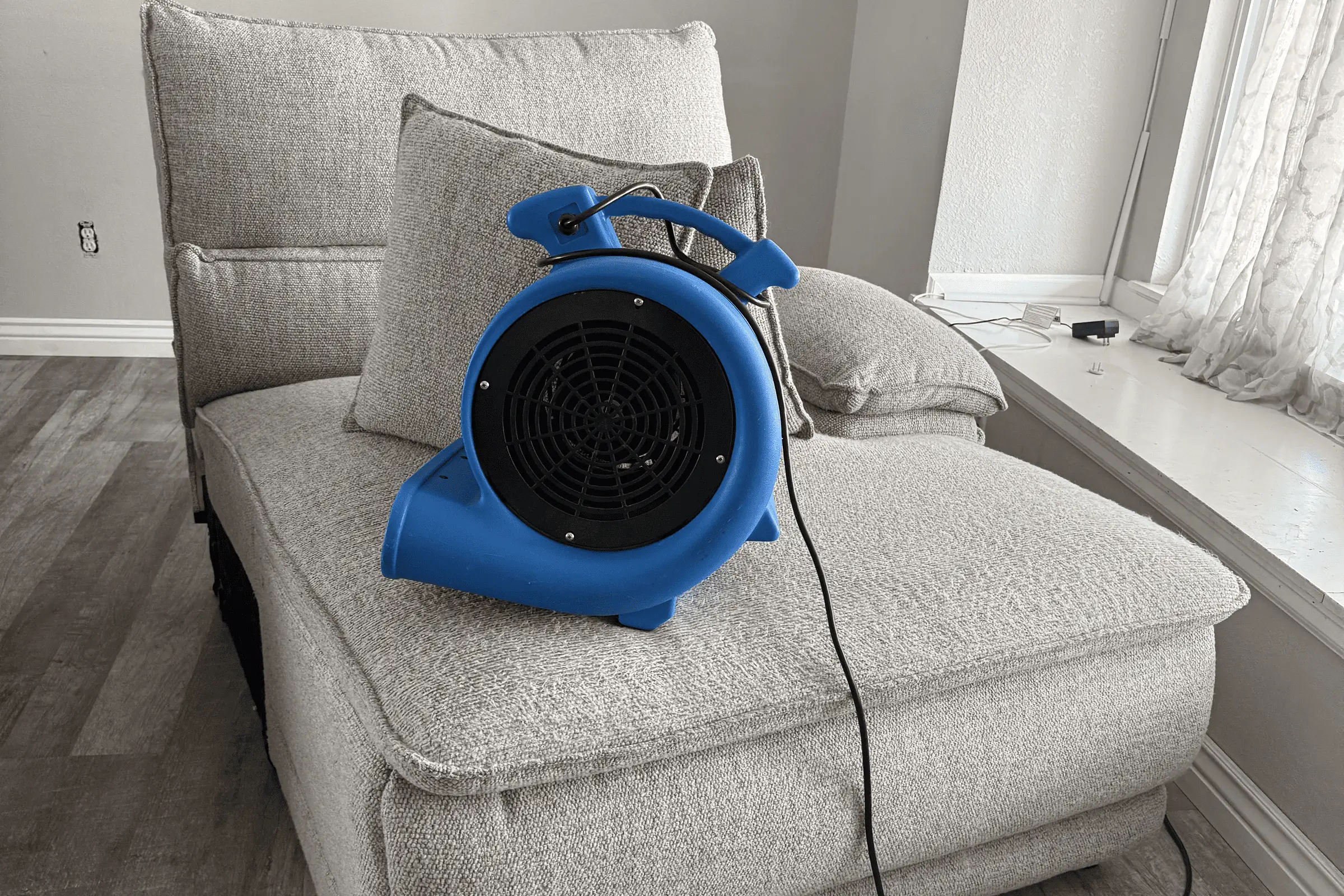
These processes rinse the upholstery and extract the moisture immediately using professional equipment.

For example, steam couch cleaning uses heated water combined with safe cleaning solutions to break down oils, dirt, and odors trapped inside the fabric. Then powerful extraction equipment removes both the dirt and moisture.

Many homeowners searching for professional sofa cleaning near me or professional furniture cleaning near me choose this option because it restores freshness much faster than home cleaning methods.

Our team at Charlotte Steamers – Couch Cleaning regularly provides couch cleaning in Charlotte, NC and upholstery fabric cleaning services designed specifically for humid climates.

Professional couch cleaning service in Charlotte, NC helps restore:

  • fabric freshness

  • healthy indoor air quality

  • the appearance of your furniture

  • comfort and softness of upholstery

In many cases, homeowners are surprised how much brighter and fresher their couch looks after professional upholstery cleaning.

Final Thoughts

Rainy weather quietly changes the environment inside your home. Extra humidity enters the air, upholstery fabric absorbs moisture, and everyday particles like dust and body oils remain trapped longer inside furniture.

Over time this can make couches feel heavier, slightly damp, or develop stronger odors. Good ventilation, simple maintenance habits, and quick spill care help protect your furniture during wet seasons.

However, upholstery cleaning is a detailed and labor-intensive process. Removing deeply trapped moisture, oils, and particles requires professional equipment, specialized cleaning solutions, and trained technicians who understand how different fabrics react to cleaning.

That’s why many homeowners eventually turn to experienced upholstery cleaning companies for help.

If your couch, sofa, or upholstered chairs feel less fresh after rainy weather, our technicians at Charlotte Steamers – Couch Cleaning are ready to help. Our upholstery cleaning services and couch cleaning services in Charlotte, NC are designed to safely restore freshness, comfort, and cleanliness to your furniture.

A professionally cleaned couch doesn’t just look better — it makes your entire home feel healthier and more comfortable. ✨

How Professional Odor Removal Works

Most homeowners think odor removal is about smell. In reality, it’s about contamination.

When a couch, rug, or mattress smells bad, the odor isn’t floating around in the air by itself. It’s being produced continuously inside the material. That’s why lighting candles, opening windows, or spraying deodorizers never fixes the issue for long. Those methods only deal with the symptom, not the cause.

Professional odor removal works because it focuses on where odors are created, not where they’re noticed.

Odors Are Created Inside Materials, Not on the Surface

Soft surfaces are designed to absorb. Upholstery fabric, cushion foam, padding, and even stitching slowly collect oils, moisture, and microscopic debris through everyday use. Pets, food, sweat, spills, and humidity all contribute to this process.

Once organic material settles inside these layers, bacteria begin to feed on it. Odor is simply the by-product of that bacterial activity. As long as bacteria remain active inside the material, odor will continue to form — even if the surface looks clean.

This is why a couch can smell worse when you sit down. Compressing the cushion pushes air out of the foam, carrying odor molecules with it. The smell didn’t suddenly appear. It was already there.

Why Masking Odors Always Fails

Air fresheners and deodorizing sprays work by overpowering unpleasant smells with stronger scents. Some products also try to temporarily neutralize odor molecules on the surface. Neither approach removes bacteria or organic residue.

Once the fragrance fades, the odor returns. In many cases, it comes back stronger because residue left behind by sprays attracts more dirt and oils, giving bacteria even more fuel.

This is why homeowners often feel stuck in a cycle of spraying, cleaning, and spraying again — without ever solving the real problem.

Professional Odor Removal Starts With Source Identification

Effective odor removal always begins with understanding where the odor lives.

Professionals don’t assume the smell is on the fabric surface. They look for areas where contamination has soaked deeper, such as cushion foam, seams, padding, or underlying layers. In homes with pets, this is often the spot where animals rest most frequently. In other cases, it may be an old spill or moisture that never fully dried.

Treating the wrong layer guarantees the odor will return. Professional odor removal works because it targets the correct depth from the start.

Breaking Down the Cause, Not Just the Smell

Once the source is identified, the next step is to break down the organic material feeding the bacteria. Odor doesn’t disappear simply because something dries or is wiped down. The bacteria must be neutralized and the residue must be broken apart.

Professional cleaning agents are designed specifically for this purpose. They don’t just add scent or clean visually. They interact with oils, proteins, and residue at a molecular level, making it possible to remove them from inside the fabric and padding without damaging the material.

This step is controlled and intentional. Too much moisture can make odor problems worse. Too little won’t reach the source. Professional odor removal balances both.

Extraction Is the Step Most DIY Methods Miss

One of the biggest reasons professional odor removal works is extraction.

DIY cleaning often applies liquid but fails to pull contamination back out. Without extraction, dissolved residue and moisture stay trapped inside cushions and padding. As the material dries, bacteria remain and odor slowly returns.

Professional equipment is designed to pull broken-down residue and moisture out of the material completely. This is what actually removes the odor source instead of leaving it behind to reactivate later.

Proper Drying Prevents Odors From Coming Back

Moisture is one of the biggest triggers for recurring odors. If furniture stays damp for too long, bacteria can rebound quickly.

Professional odor removal controls moisture carefully. The goal is deep cleaning without saturation, followed by fast, even drying. This prevents the musty or sour smells that sometimes appear after improper cleaning and ensures the environment inside the cushion isn’t favorable for bacteria to return.

This drying phase is just as important as the cleaning itself.

Why Odors Often Return After “Cleaning”

When odors come back, it usually means one of three things happened. The cleaning didn’t reach the padding or foam where the odor lived. Moisture was left behind without proper extraction. Or residue remained in the fabric and continued feeding bacteria.

Professional odor removal addresses all three issues at once. That’s why it works when repeated DIY attempts don’t.

What Professional Odor Removal Should Leave Behind

A properly treated piece of furniture shouldn’t smell “fresh” or perfumed. It should smell neutral.

The absence of odor is the goal, not replacing one scent with another. When the source is removed, there’s nothing left to cover up.

Final Thoughts

Professional odor removal works because it respects how odors actually form. Smells don’t live on the surface, and they don’t disappear with fragrance. They come from bacteria and organic buildup trapped deep inside materials.

By breaking down those materials, extracting them properly, and controlling moisture throughout the process, professional odor removal eliminates the cause — not just the symptom.

If odors keep coming back, it’s not because you haven’t tried hard enough. It’s because the source hasn’t been fully removed yet.

Where Pet Odors Really Come From

If you live with a dog or cat, you already know this story. You can vacuum. You can light a candle. You can open windows for a full afternoon. For a moment, everything feels fine — and then the smell returns. Sometimes it hits you when you walk in the door. Sometimes it shows up on humid days. Sometimes you don’t notice it until a guest does.

The frustrating part is that pet odors often don’t match what you see. Your couch can look clean. Your carpet can look freshly vacuumed. Your home can feel tidy. And still, there’s that “pet smell” hanging in the air.

That’s because most pet odors aren’t surface-level. They come from what sinks into fabric, foam, and padding over time — and then quietly builds into a bigger problem than most people expect.

The Real Source of Pet Odor: Bacteria + Organic Material

When people say “my couch smells like dog,” they usually imagine the smell is coming from fur. In reality, fur is rarely the main cause. The smell comes from bacteria and microscopic buildup — the stuff you can’t see — feeding on organic material left behind by pets.

Pets naturally leave behind skin oils, saliva, dander, and tiny particles from paws and coats. Those materials settle into upholstery fibers and cushion foam. Once they’re there, they don’t just sit harmlessly. They become food for bacteria. And bacteria produce odor as a byproduct.

So the smell you notice isn’t the pet itself. It’s the ecosystem that forms inside soft surfaces after weeks and months of normal life.

Why the Smell “Suddenly” Gets Worse

A lot of homeowners say the same thing: “It wasn’t that bad before, and now it’s noticeable.” That’s not your imagination. Pet odor often reaches a tipping point.

At first, the buildup is light. The couch still smells mostly fine. Then it accumulates — more oils, more dander, more microscopic debris — until one day you catch it. Maybe the heat runs more. Maybe the humidity rises. Maybe you sit down and the cushion compresses, pushing air out of the foam. That’s when the odor becomes obvious.

This is why pet odor can feel inconsistent. It’s not that the smell disappears and returns at random. It’s that conditions change, and those conditions make trapped odor molecules release into the air.

Moisture Is the Odor “Volume Knob”

Humidity plays a huge role in pet odors, especially in places like Charlotte where moisture in the air is common. Moisture doesn’t just “carry” smells — it can reactivate them.

Upholstery and cushion foam act like sponges. When humidity rises, the materials absorb moisture. That added moisture wakes up bacteria, increases microbial activity, and helps odor compounds travel. In simple terms: humidity makes the smell louder.

It’s also why you might notice the couch smells worse after:

  • a rainy week

  • running a humidifier

  • having windows open on a muggy day

  • shampooing carpet without fully drying it

The odor source never left. It just became more active.

The Hidden Problem: Cushion Foam and Padding

Here’s the part most people don’t realize: the fabric you touch is only the outer layer. Under that layer is where odor problems become stubborn.

Cushion foam absorbs oils and moisture slowly, then holds onto them for a long time. If a pet regularly lies on the same spot, that spot becomes a storage unit for body oils, dander, and bacteria.

This is why a couch can smell even after you wipe the surface. You cleaned the “skin” of the couch, but the smell is living in the “organs.” The foam is the reservoir.

And once foam is contaminated, covering it up doesn’t solve it. Air fresheners may mask it for an hour. Fabric sprays may cover it until the product evaporates. But when you sit down and compress the cushion, the trapped air moves — and the odor comes right back out.

Pet Accidents Are Often Bigger Than They Look

Urine is one of the most common odor sources, and it doesn’t have to be a dramatic accident. Even a small amount can sink deep into cushions, carpet padding, or rugs.

When urine gets into fabric and padding, it doesn’t just “dry and disappear.” It breaks down over time. Bacteria feed on it. Ammonia compounds can form. And the smell changes from “wet dog” to something sharper and more persistent.

The worst part is that pet urine is designed to soak in. It travels with gravity, spreads through foam, and settles into the deepest layers. That’s why the surface can look normal while the odor keeps returning.

If you’ve ever thought, “I cleaned it, but it still smells when the room warms up,” that’s exactly what’s happening. The material underneath is still contaminated.

Why Vacuuming Isn’t Enough (Even If You Do It All the Time)

Vacuuming helps with loose hair and crumbs. But pet odor isn’t caused by hair sitting on top of the couch. The odor is in the embedded oils, the dander, and the bacteria below the surface.

Hair also tends to wedge into seams, under cushions, and into the texture of certain fabrics. Even with a strong vacuum, you rarely remove everything. And whatever remains continues to hold onto oils and odor compounds.

Think of vacuuming like sweeping a floor. It makes things look better, but it doesn’t disinfect or remove what’s been absorbed into porous material.

Why “Deodorizing Sprays” Usually Fail

Most deodorizing products work in one of two ways:

  1. they add fragrance to overpower the smell

  2. they use a chemical that temporarily neutralizes odor molecules on the surface

The key phrase is “on the surface.”

If the odor is in the foam, padding, or deeper fibers, surface sprays can’t solve it. Even worse, many sprays leave residue behind. That residue can attract more dirt, which gives bacteria even more to feed on. Over time, this can make the couch feel grimy and smell “stale” faster.

It’s also common for DIY cleaning to involve too much water. When homeowners oversaturate upholstery, the couch may not dry properly. A damp cushion becomes the perfect environment for odor to intensify.

That’s how good intentions turn into a smell that seems impossible to remove.

The Truth: Pet Odor Is a Deep-Cleaning Problem

To truly remove pet odor, you have to remove what’s causing it — not just perfume over it. That typically means breaking down and extracting:

  • embedded oils

  • bacteria

  • urine residue (if present)

  • dander and other organic buildup

When done correctly, deep upholstery cleaning targets the layers where odors live. It’s not only about “steam.” It’s about controlled moisture, proper agitation, and strong extraction so the couch dries fast and doesn’t turn into a damp sponge.

That’s why professional cleaning tends to work when DIY methods don’t. It’s not magic. It’s reach and removal.

How to Know If the Odor Is in Your Couch (Not Just the Room)

A simple test: get close to the couch and smell the area where your pet lies most often. Then press down on the cushion and release. If you notice a stronger odor when you compress the cushion, that’s a sign the smell is inside the foam.

Another clue is repeat odor. If you’ve “cleaned” the couch multiple times but the smell returns after a few days, the source is deeper than the fabric.

Final Thoughts

Pet odors aren’t a sign that you’re doing something wrong. They’re a sign that soft surfaces hold onto life. Couches, rugs, carpets, and cushions quietly absorb oils, moisture, dander, and bacteria — and those things create odor from the inside out.

Once you understand that, the problem becomes clearer. You can’t permanently remove a deep odor with a surface solution. The only lasting fix is getting the source out of the fibers and padding where it lives.

Why Your Couch Needs More Than Spot Cleaning

Most homeowners rely on spot cleaning when something spills on the couch. A little spray, a paper towel, maybe a scrub with a damp cloth — and the stain looks gone. Problem solved, right?

Not exactly.

While spot cleaning has its place, it only treats what you can see on the surface. What’s happening deeper inside your couch is a very different story. Over time, dirt, oils, odors, and allergens build up inside the fabric and cushions, even if the couch looks “clean enough.”

Here’s why spot cleaning alone is never enough.

Spot Cleaning Only Fixes the Surface

Spot cleaning is designed to handle fresh, isolated stains. It can help with a small spill if you act quickly. But it doesn’t remove the dirt that settles deep into upholstery fibers.

Every time someone sits on the couch, natural body oils, sweat, dust, and debris get pressed further into the fabric. Pets and kids speed up this process even more. Spot cleaning doesn’t reach these layers, so the couch slowly becomes dirtier from the inside out.

That’s why many couches look fine at first, then suddenly start looking dull, dark, or worn — even without obvious stains.

Stains Often Spread Instead of Disappearing

One of the biggest problems with DIY spot cleaning is over-wetting the fabric. When too much liquid is used, the stain can spread beyond its original area.

Instead of removing the problem, you end up with:

  • Water rings

  • Larger discolored areas

  • Uneven fabric texture

In many cases, the stain isn’t gone — it’s just been pushed deeper into the cushion, where it slowly resurfaces over time.

Residue Attracts More Dirt

Most store-bought upholstery cleaners leave behind residue. Even if the couch looks clean right after, that residue acts like a magnet for dirt.

As people sit on the couch, dust and oils stick to the leftover cleaner. The result is a couch that gets dirty faster than before. This is why some homeowners feel like their couch never stays clean for long, no matter how often they spot clean.

Professional cleaning removes both dirt and residue, leaving the fabric truly clean instead of sticky.

Odors Don’t Come From the Surface

Couch odors usually come from deep inside the cushions, not the surface fabric.

Pet accidents, food spills, moisture, and everyday use soak into the padding underneath. Spot cleaning might mask the smell for a short time, but it doesn’t remove the source.

That’s why odors often:

  • Come back after a few days

  • Get stronger in humid weather

  • Return as soon as the couch dries

Deep cleaning is the only way to fully remove odor-causing bacteria.

Allergens Build Up Where You Can’t See Them

Couches trap allergens like:

  • Dust mites

  • Pollen

  • Pet dander

Vacuuming and spot cleaning barely touch these particles once they’re embedded in the fabric and cushions. For families with allergies or asthma, this buildup can affect indoor air quality and comfort.

Professional upholstery cleaning uses controlled steam and extraction to remove allergens that household methods simply can’t reach.

Frequent Spot Cleaning Can Damage Fabric

Ironically, too much spot cleaning can shorten the life of your couch.

Repeated scrubbing can:

  • Fray upholstery fibers

  • Fade colors

  • Create worn patches

  • Cause fabric thinning

Different couch materials also require different cleaning methods. Using the wrong product can permanently damage the fabric.

Professional cleaners adjust their process based on the couch material, preventing unnecessary wear.

When Spot Cleaning Makes Sense — And When It Doesn’t

Spot cleaning is useful when:

  • A spill just happened

  • The stain is small

  • You blot gently and don’t oversaturate

It’s not enough when:

  • The couch hasn’t been professionally cleaned in months or years

  • Odors are present

  • The fabric looks dull or dark

  • Allergies or pet issues are involved

Think of spot cleaning as a short-term fix, not a long-term solution.

The Real Solution: Full Upholstery Cleaning

Professional couch cleaning doesn’t just treat visible stains. It cleans the entire couch — fabric, cushions, and padding — removing dirt, bacteria, allergens, and residue in one process.

The result is:

  • Even color and texture

  • No sticky residue

  • Longer-lasting freshness

  • A healthier living space

Most homes benefit from full couch cleaning every 6–12 months, and more often for families with kids or pets.

Final Thoughts

Spot cleaning can help in the moment, but it doesn’t solve the bigger problem. Over time, dirt and contaminants build up deep inside your couch, affecting both its appearance and cleanliness.

If you want your couch to truly look, feel, and smell clean — not just temporarily — it needs more than spot cleaning.

How Often Should You Clean Your Couch?

A Simple Guide for Charlotte Families

Your couch is one of the most used pieces of furniture in your home. It’s where families relax, kids play, pets nap, and guests gather. Over time, dirt, oils, allergens, and stains build up deep inside the fabric — even if the couch still looks clean on the surface.

For homeowners in Charlotte, regular couch cleaning is especially important due to humidity, seasonal pollen, and active family lifestyles. So how often should you really clean your couch?

Here’s a simple, practical guide.


General Recommendation: Every 6–12 Months

For households without pets or young children, a professional couch cleaning once every 6 to 12 months is usually enough.

This routine:

  • Removes embedded dirt and dust

  • Helps prevent fabric wear

  • Keeps your couch looking fresh longer

Weekly vacuuming can help between professional cleanings, but it won’t remove deep-seated grime.


Homes With Kids: Every 3–6 Months

Children are tough on furniture. Spills, snacks, art supplies, and everyday messes add up quickly.

Common issues include:

  • Juice and food stains

  • Marker or pen marks

  • Sticky residue and bacteria

In homes with kids, waiting a full year often leads to stains becoming permanent.

Recommended schedule:
Professional couch cleaning every 3–6 months

This helps protect the fabric and keeps the couch cleaner and safer for daily use.


Homes With Pets: Every 3–4 Months

Pets bring comfort — and also hair, odors, and accidents.

Even if you vacuum regularly, pet hair and smells settle deep into upholstery fibers, especially in Charlotte’s humid climate.

Recommended schedule:
Professional couch cleaning every 3–4 months

This helps control odors, reduce allergens, and keep your home smelling clean.


Allergy or Asthma Concerns: Every 3 Months

Couches trap:

  • Pollen

  • Dust mites

  • Pet dander

If someone in your household has allergies or asthma, your couch can be a hidden trigger.

Recommended schedule:
Professional upholstery deep cleaning every 3 months

Steam cleaning removes allergens that standard household cleaning methods can’t reach.


Special Situations to Clean Your Couch

You may also want to schedule couch cleaning when:

  • Preparing your home before a baby arrives

  • Hosting guests or family events

  • Moving into a new home

  • Moving out or selling your house

In these cases, cleaning isn’t just cosmetic — it’s about hygiene and comfort.


Signs It’s Time to Clean Your Couch

Not sure if you’re overdue? Look for these signs:

  • Visible stains or darkened fabric

  • Lingering odors

  • Increased allergy symptoms indoors

  • Fabric feels stiff, sticky, or rough

  • The couch looks dull even after vacuuming

If you notice any of these, it’s time for professional cleaning.


Why Professional Couch Cleaning Is Worth It

DIY cleaners and store-bought sprays often:

  • Push dirt deeper into the fabric

  • Leave residue that attracts more dirt

  • Damage upholstery fibers

Professional couch cleaning uses proper equipment and fabric-safe solutions to clean deeply without harming your furniture.


Final Thoughts

For most Charlotte families, couch cleaning every 6–12 months is the minimum. Homes with kids, pets, or allergies benefit from more frequent cleanings every 3–6 months.

Regular couch cleaning keeps your home healthier, your furniture lasting longer, and your living space more comfortable for everyone.